Making DAO governance usable
An independent university research and product concept that moved from DAO and Ethereum foundations into an admin experience for staff bonuses, voting, wallets, and governance.
- Role
- Product Designer and Researcher
- Year
- 2020
- Platform
- Web
- Deliverable
- 31 slidesoriginal presentation
- Scope
- Staff + adminprototype scope
- Scope
- Governance + treasuryproduct scope
Evidence note: Independent university concept; it was not commissioned, shipped or outcome-validated, and all visible product data is illustrative.
On this page
What the concept needed to communicate
DAO governance asks people to understand shared decision-making, voting, wallets, and automated rules at the same time. The project explored whether those ideas could feel more familiar when translated into recognisable staff and admin software.
Decision chapters
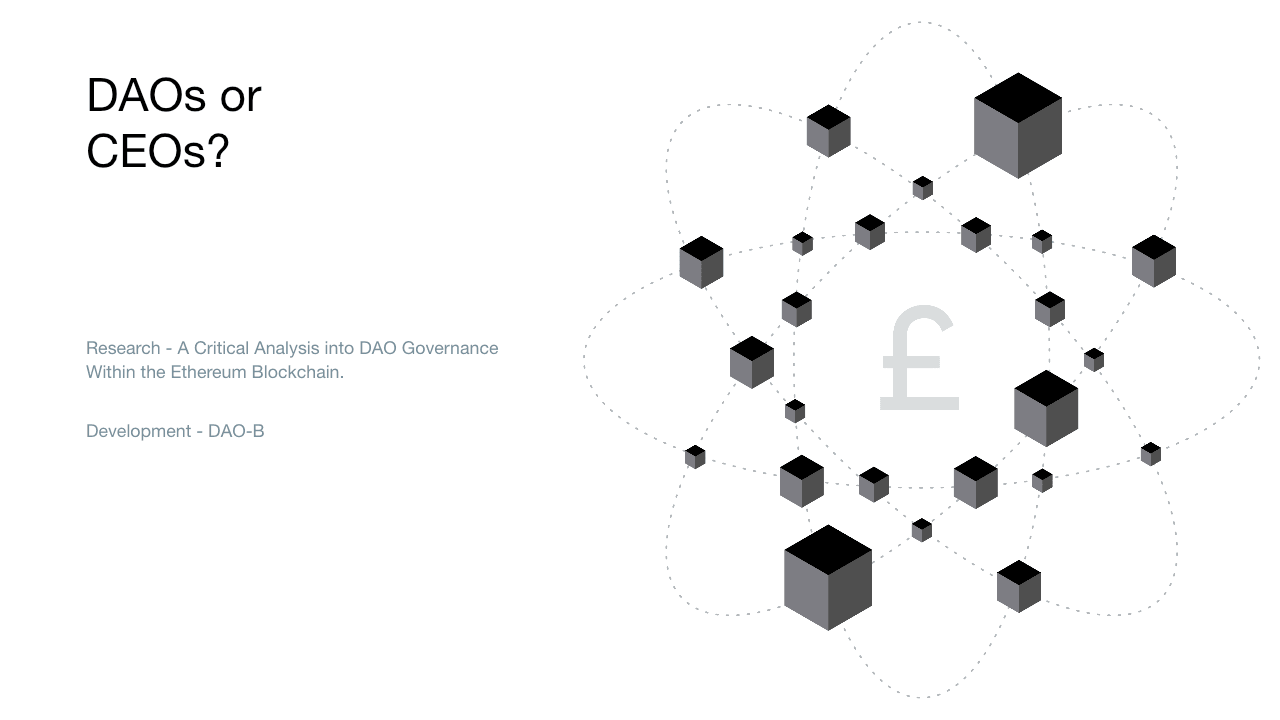
The original presentation starts with a critical look at DAOs, Ethereum, and on-chain tradeoffs before introducing DAO-B. That sequence matters because it shows the product as a response to an organisational question, not just a set of screens with blockchain language added later.
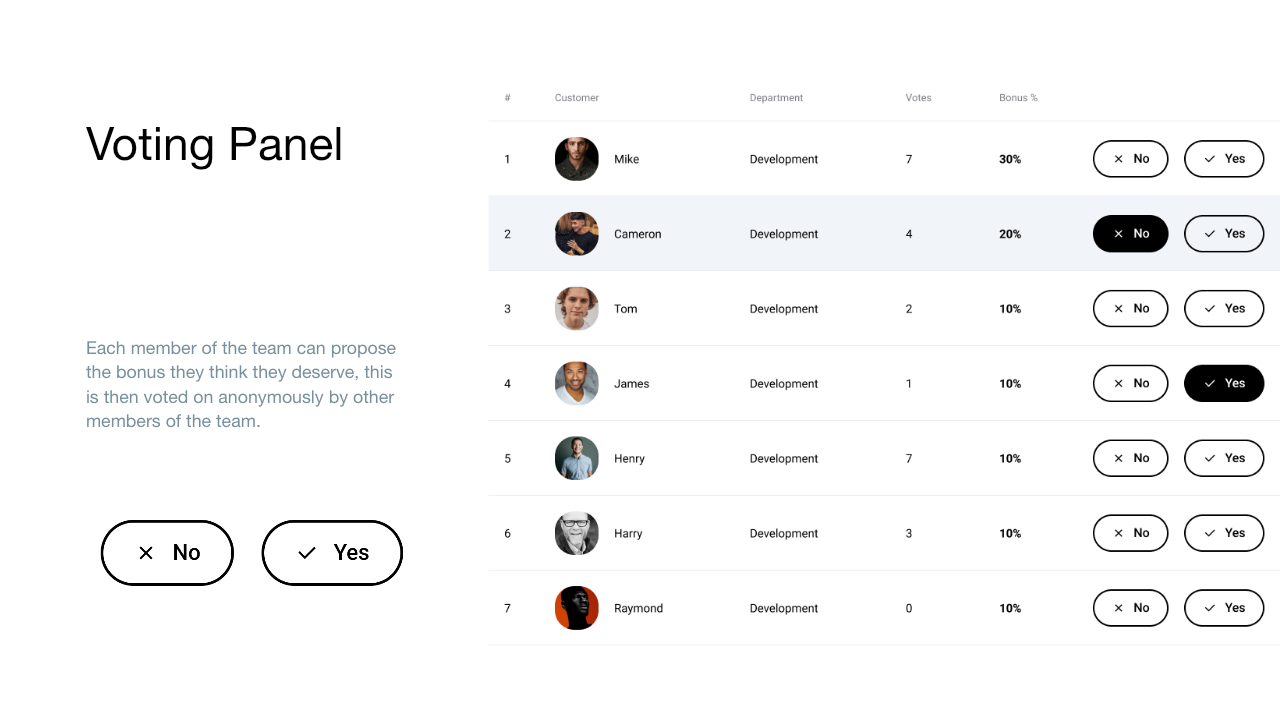
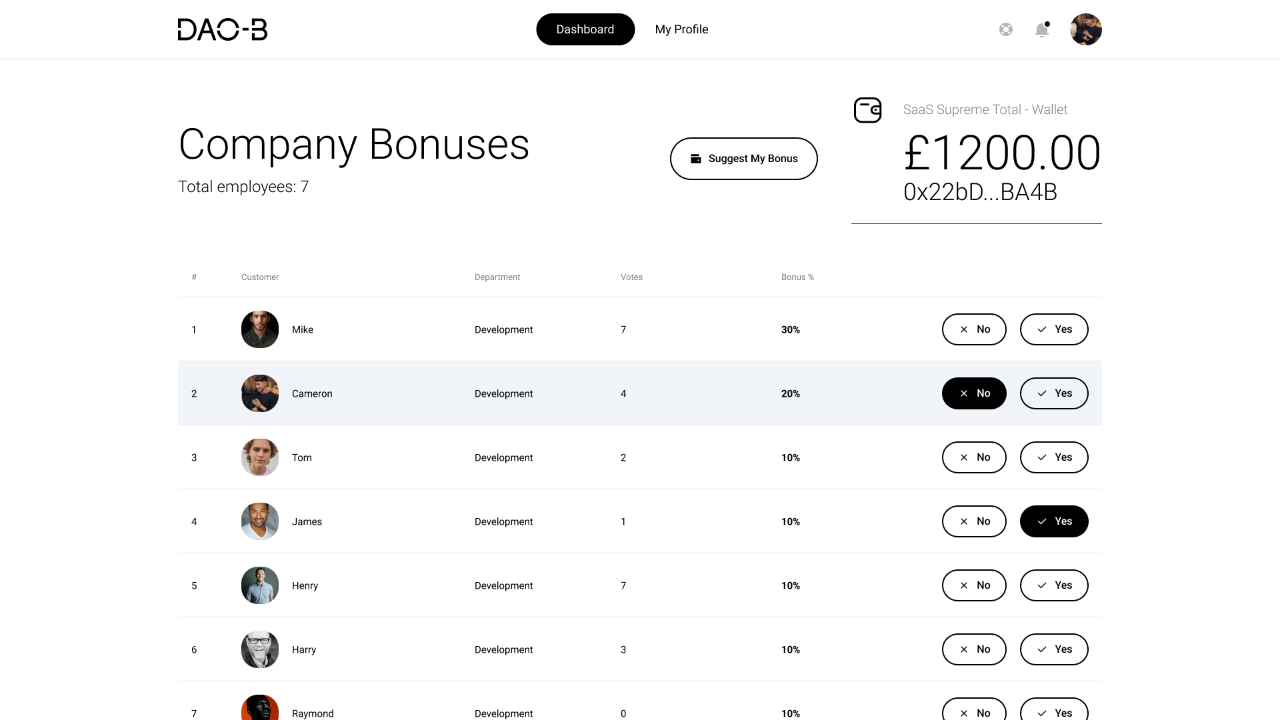
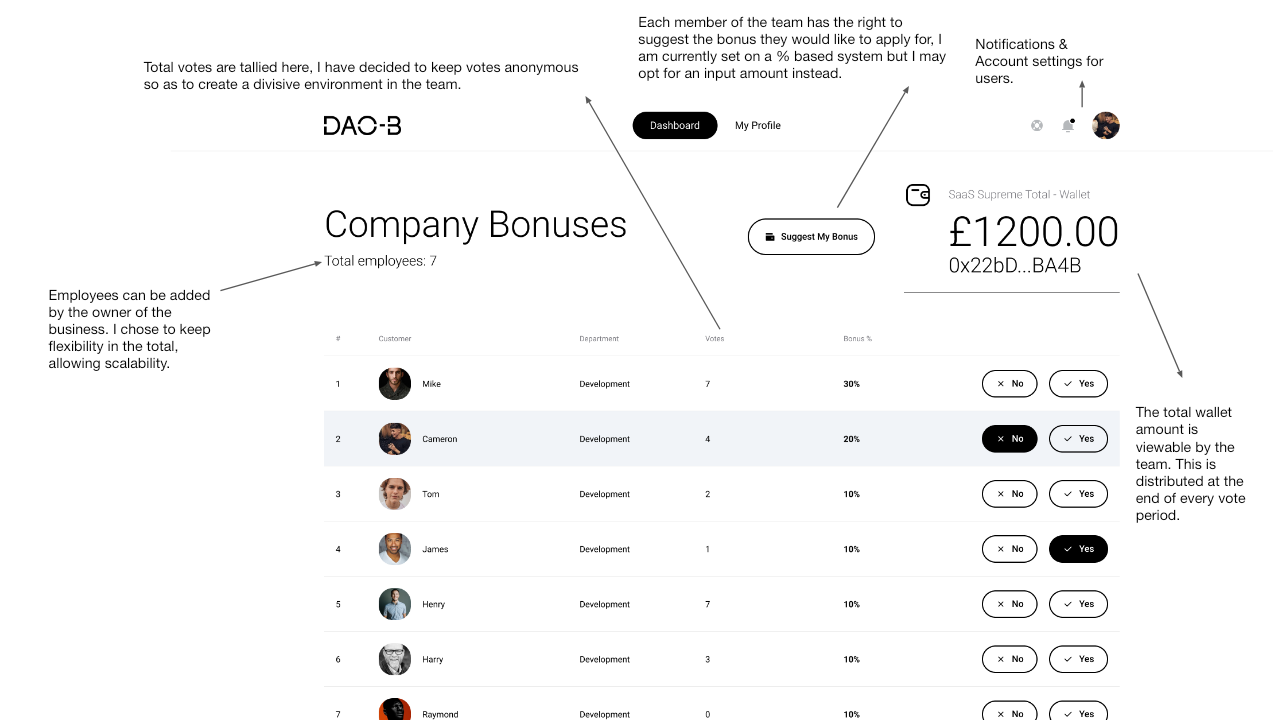
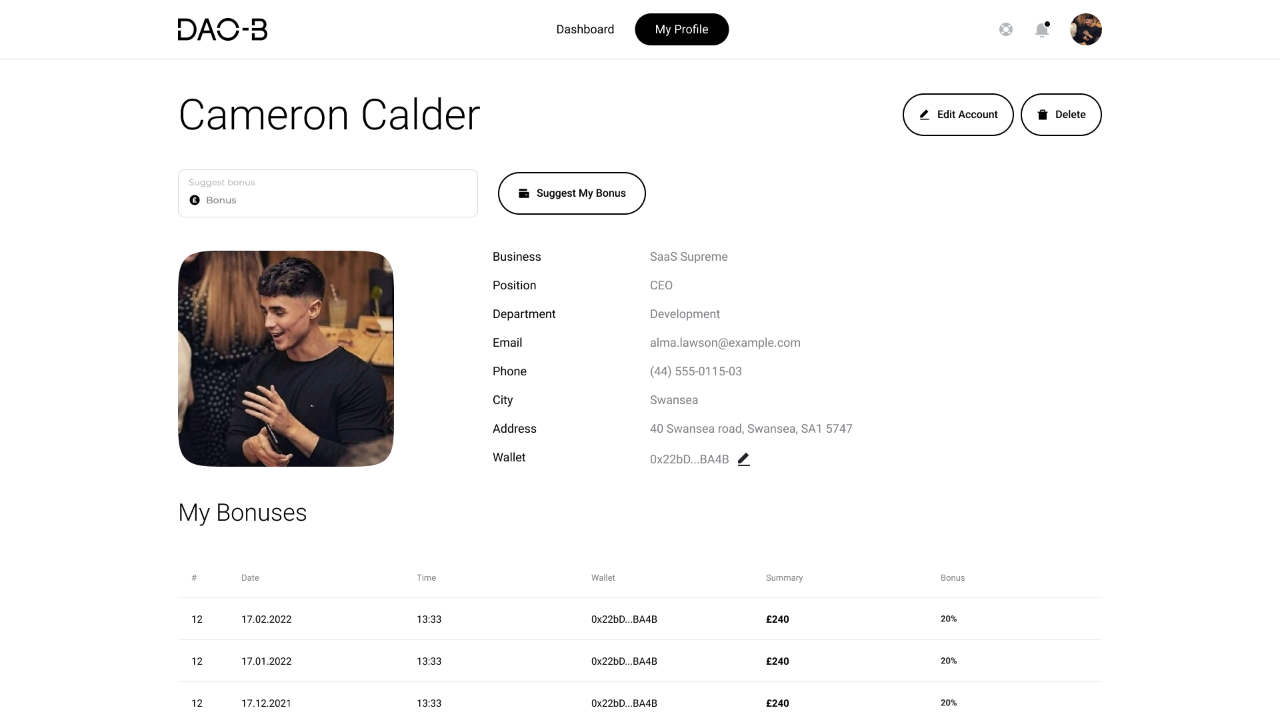
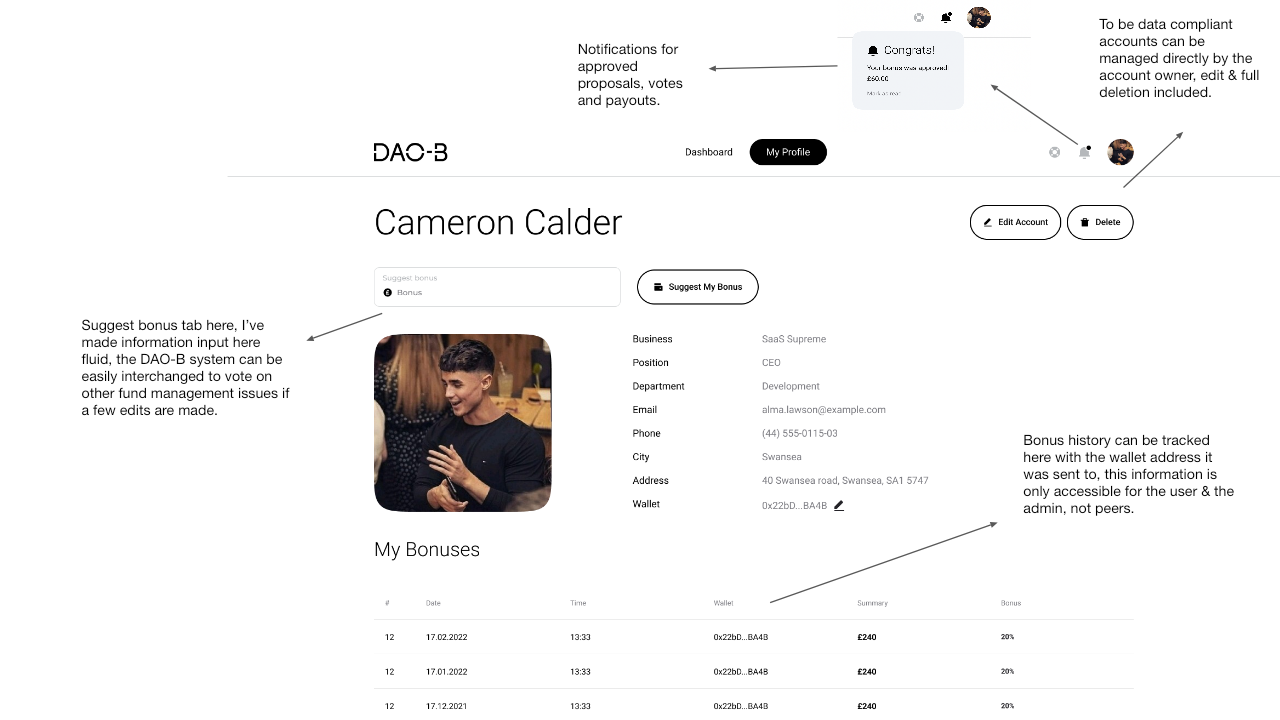
The staff experience turns governance into a concrete sequence. A person can suggest a bonus, read the shared wallet balance, vote yes or no, and see the proposal move through a visible state. The interface uses familiar tables and account patterns to keep the decision itself in focus.
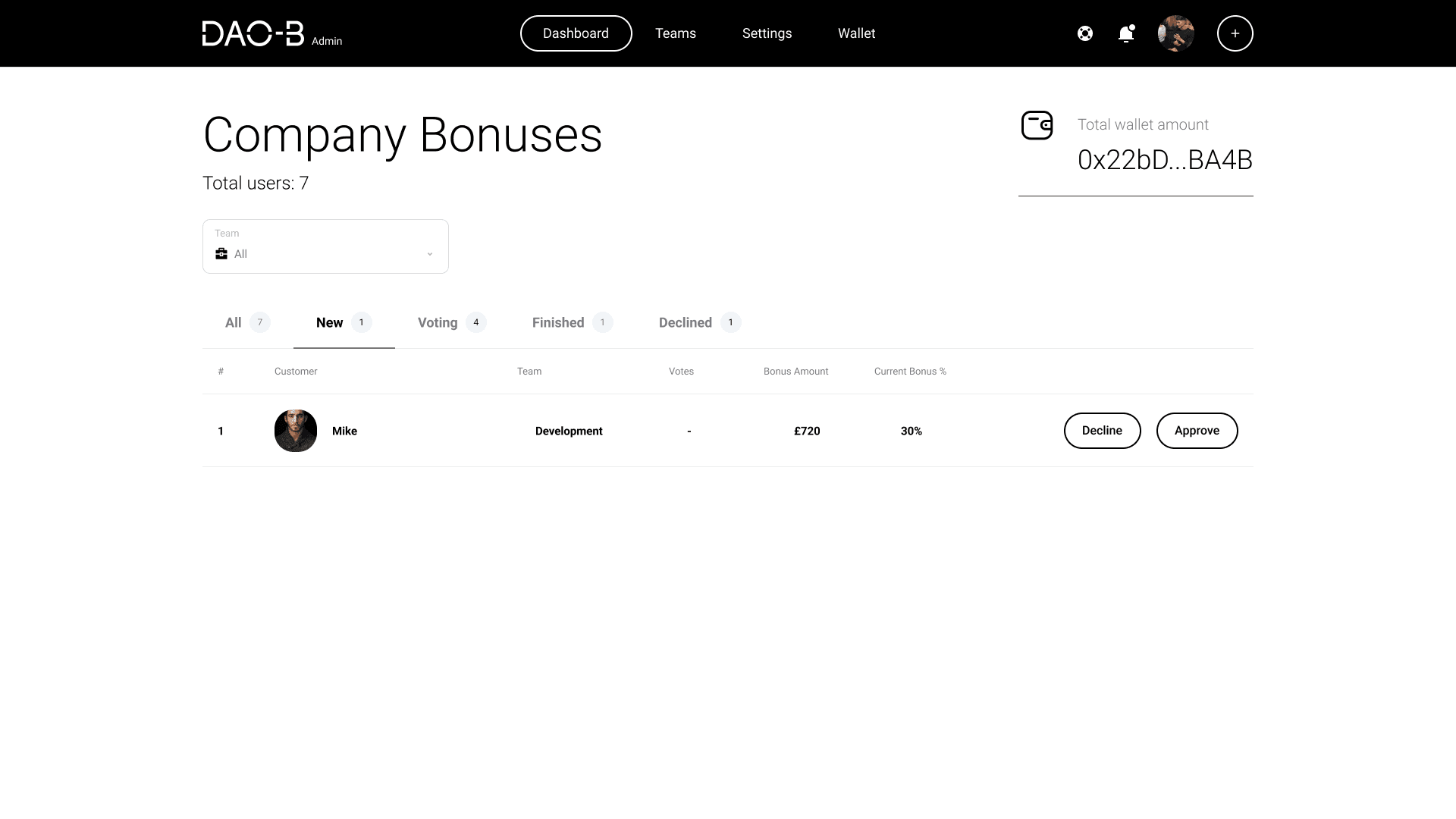
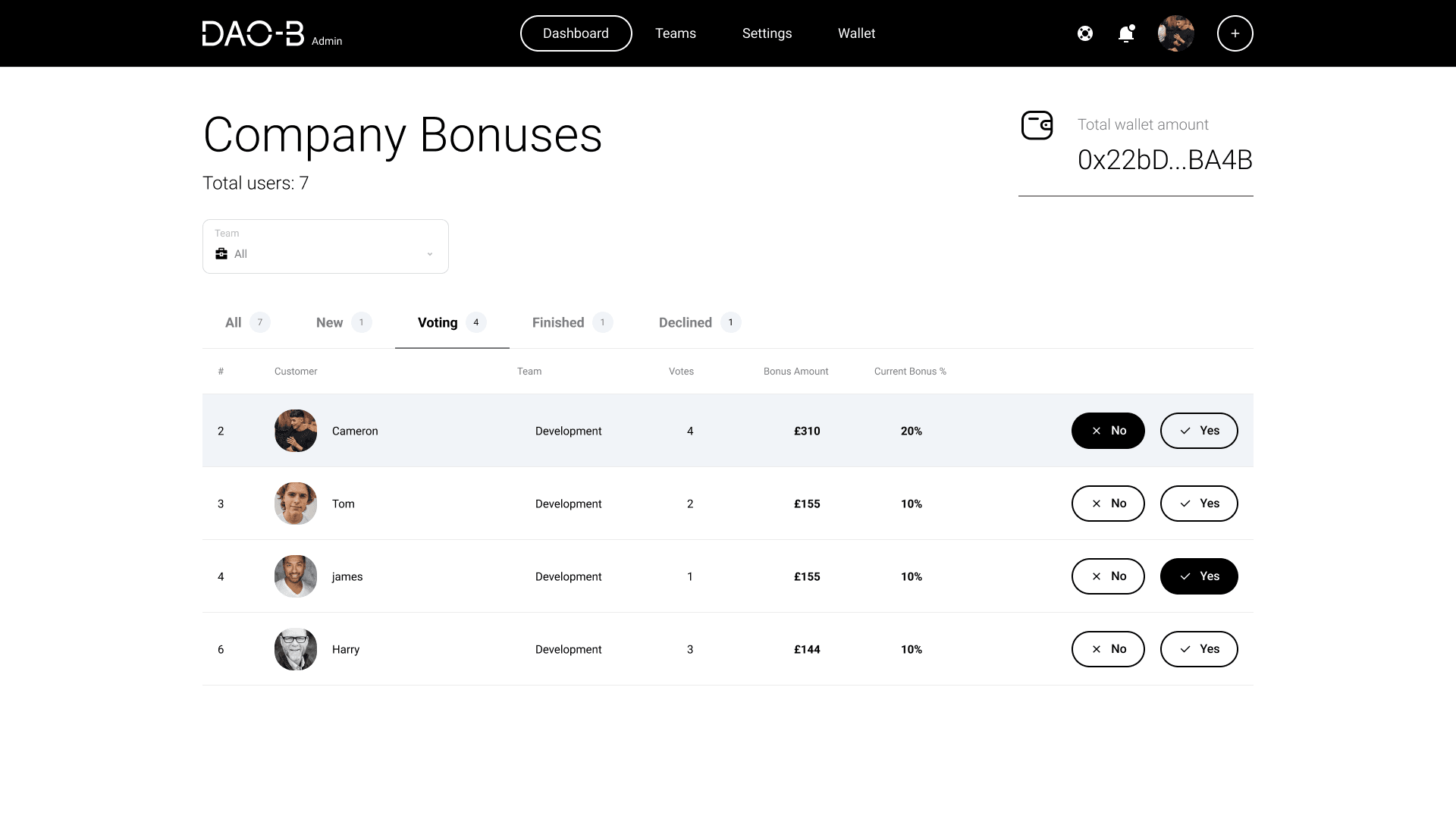
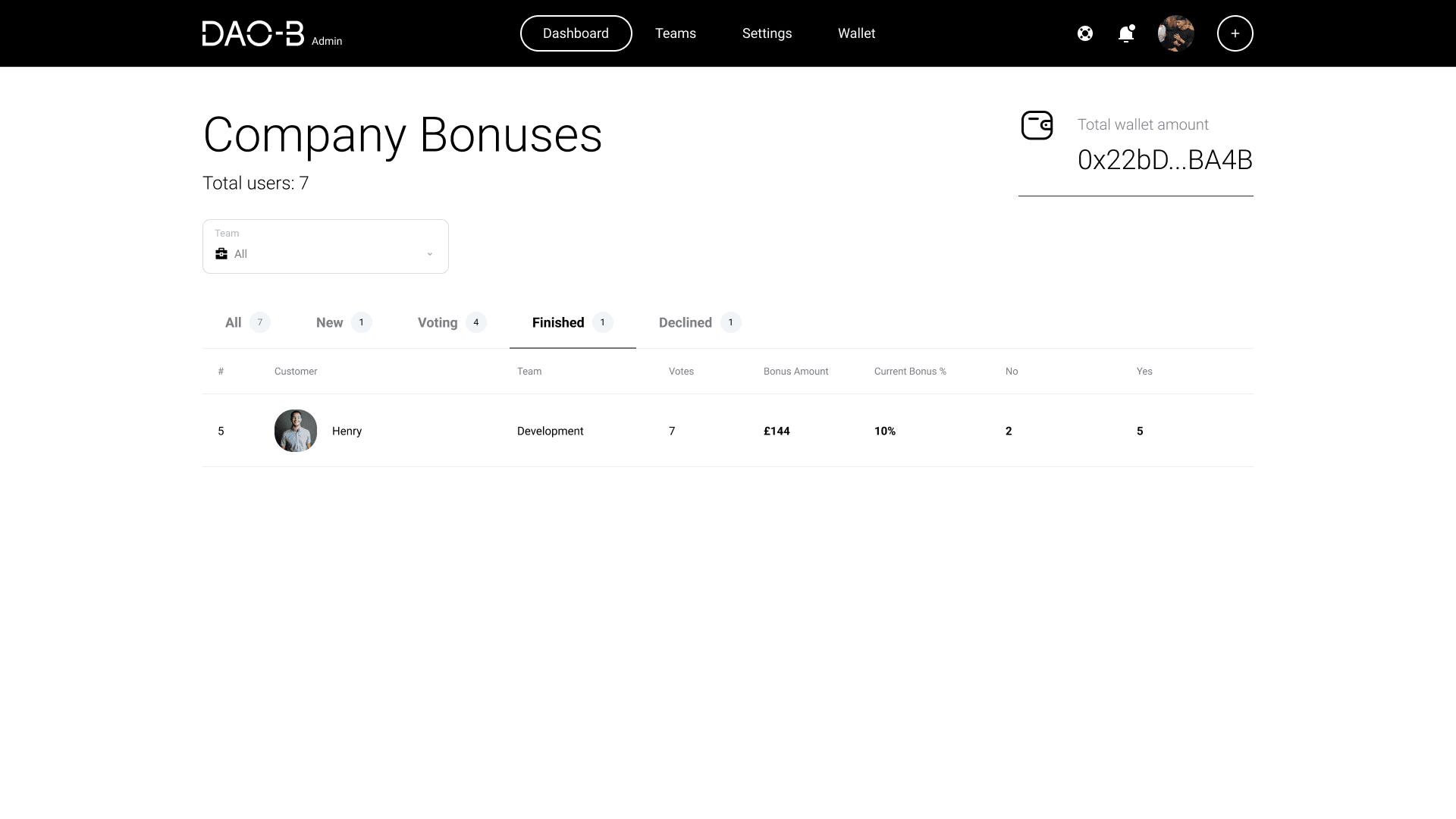
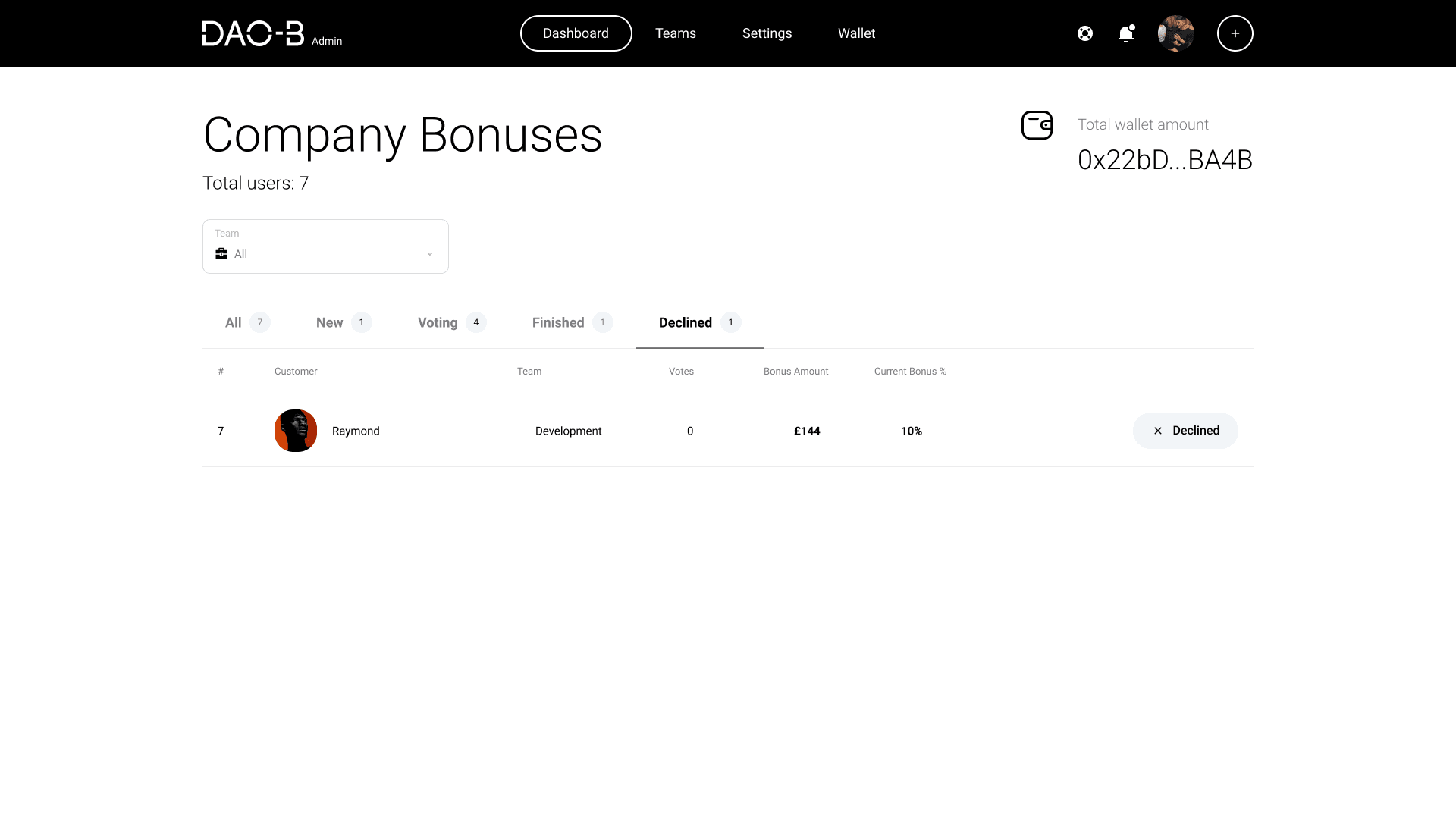
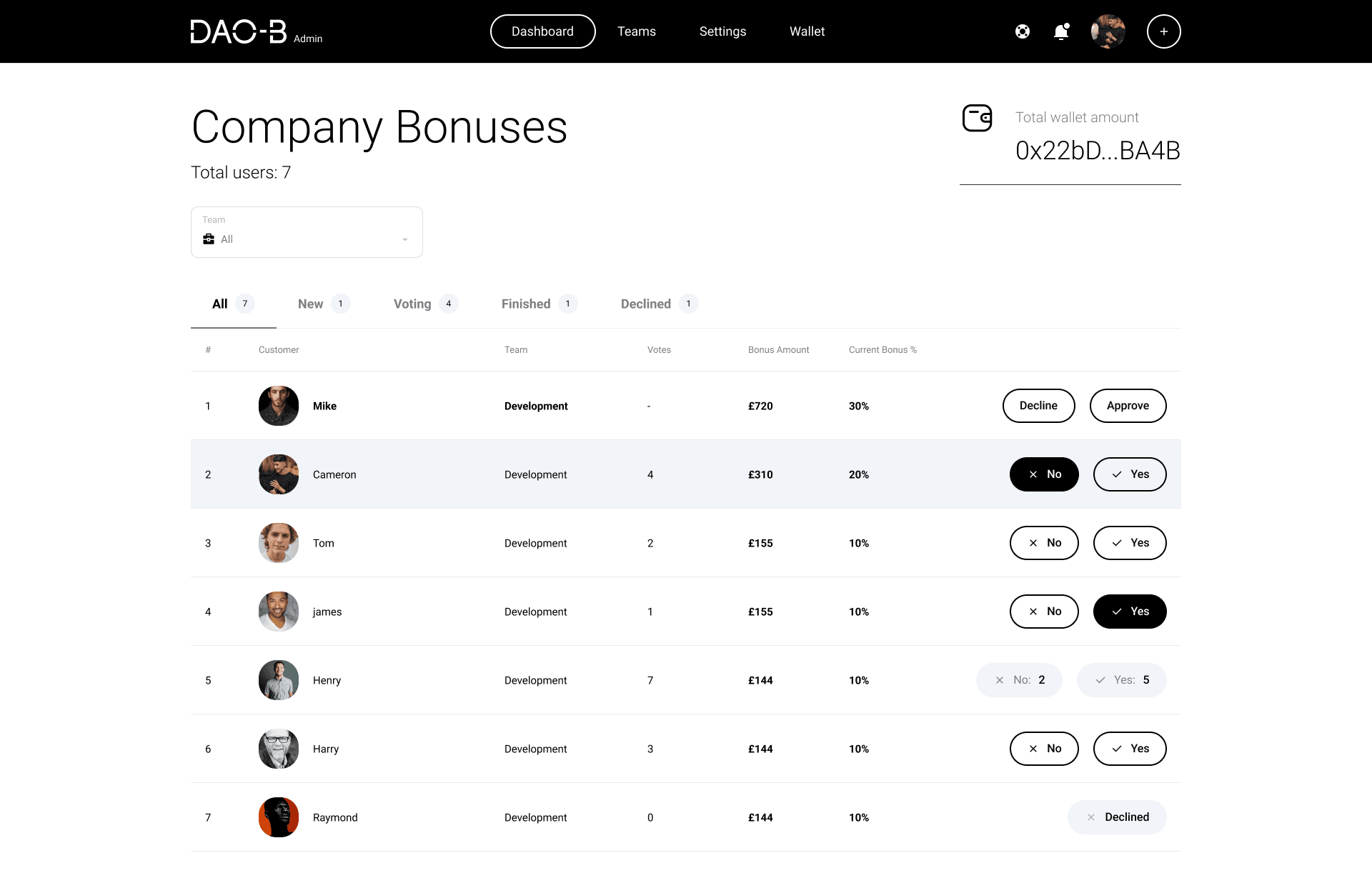
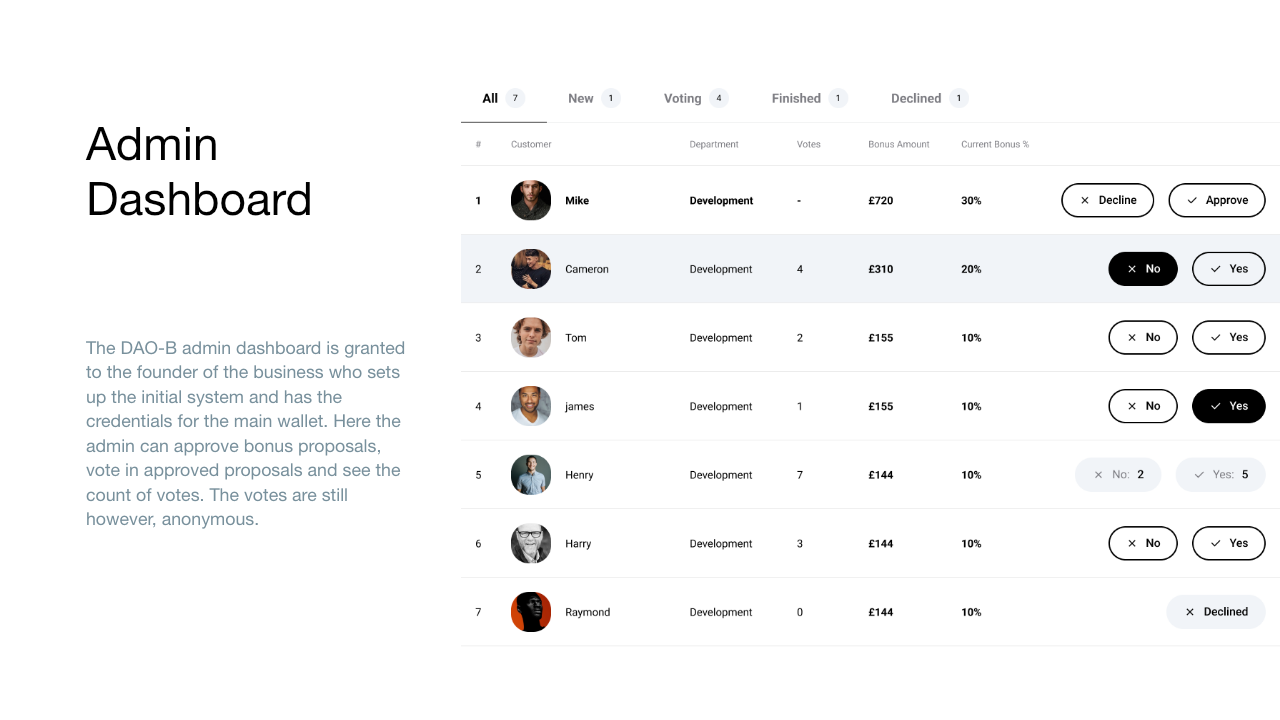
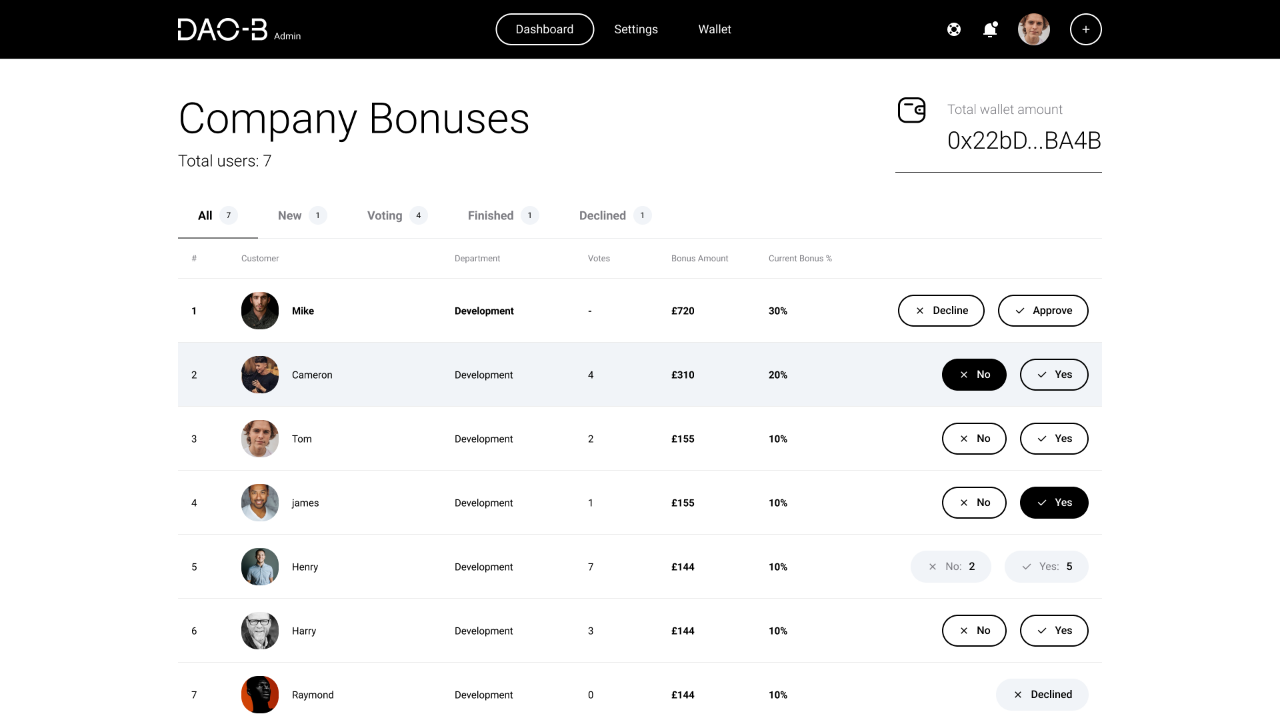
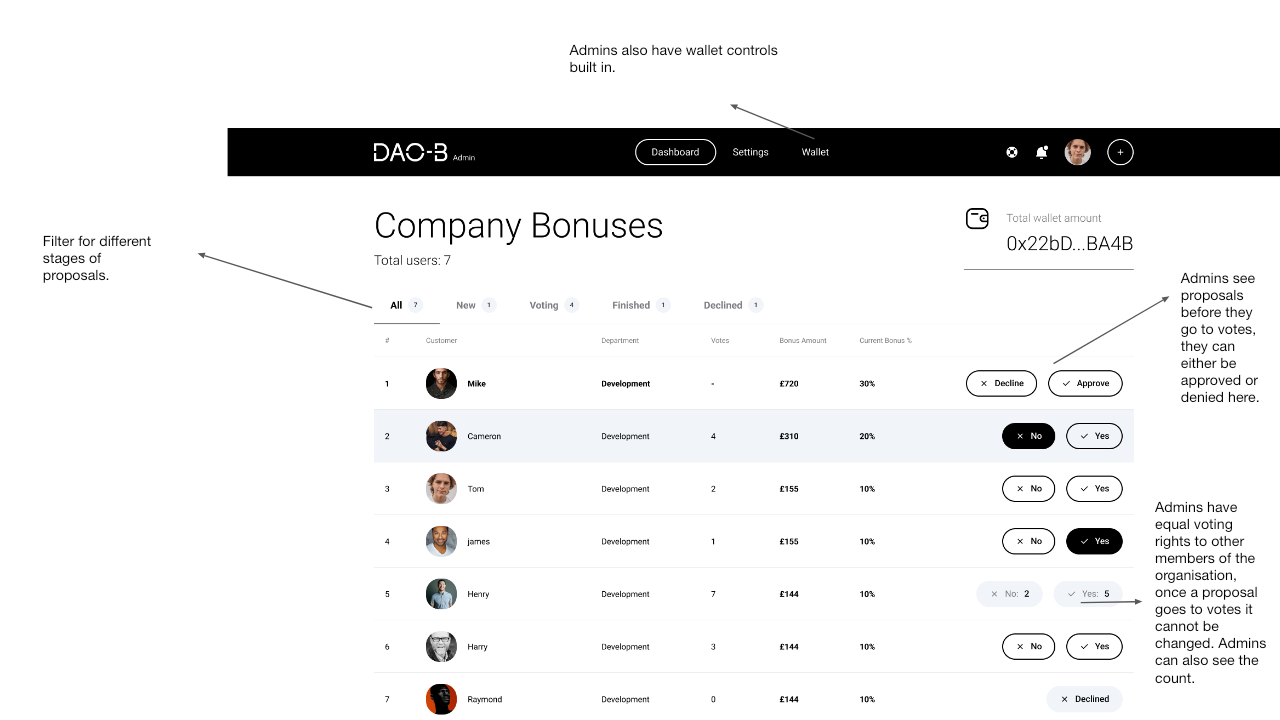
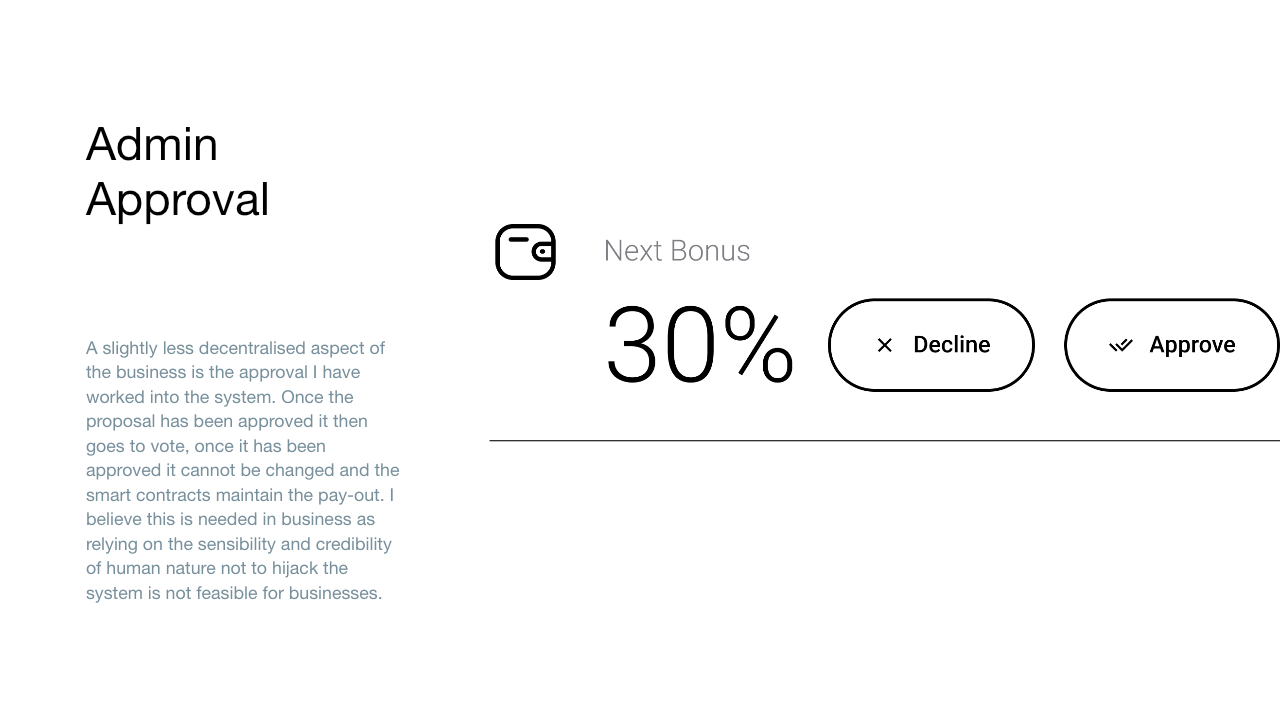
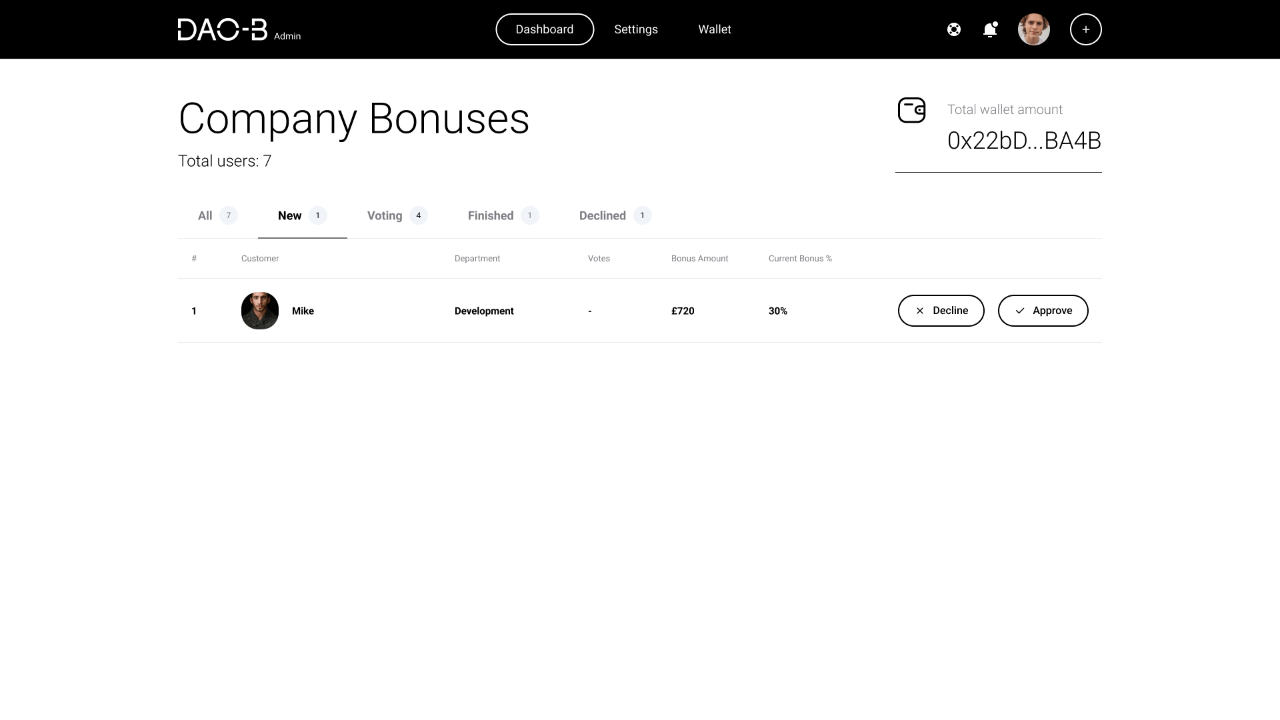
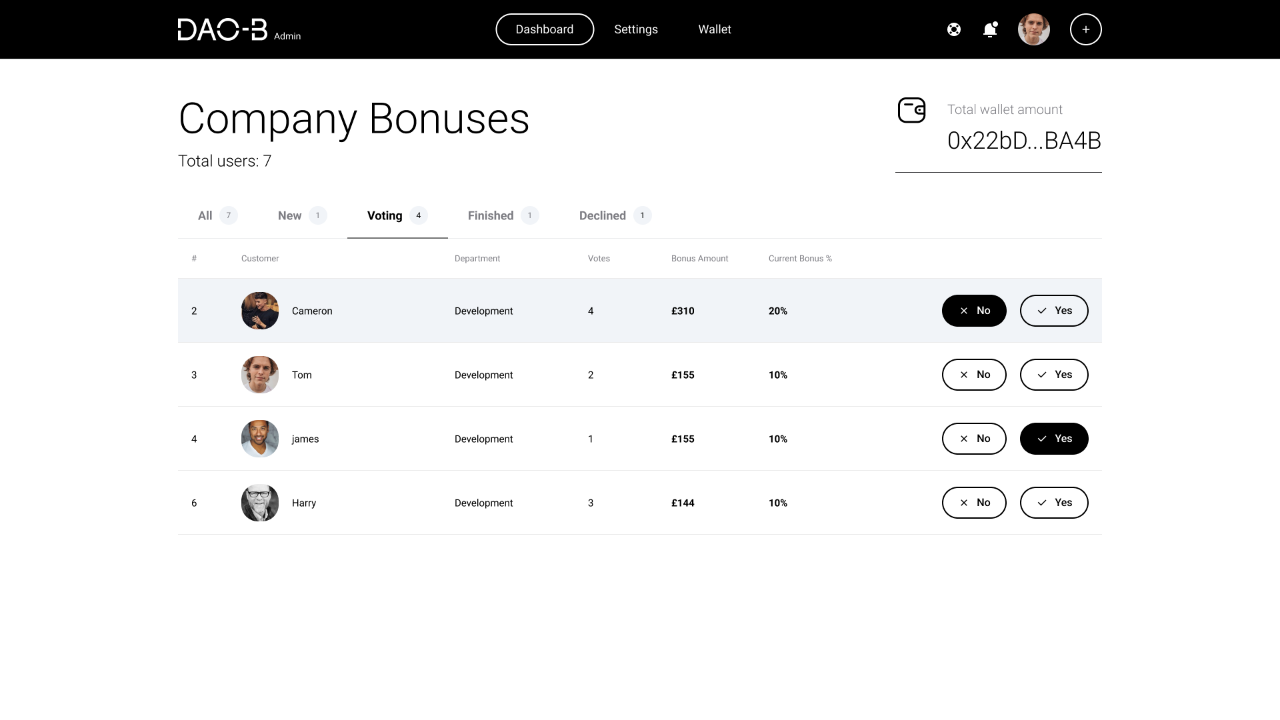
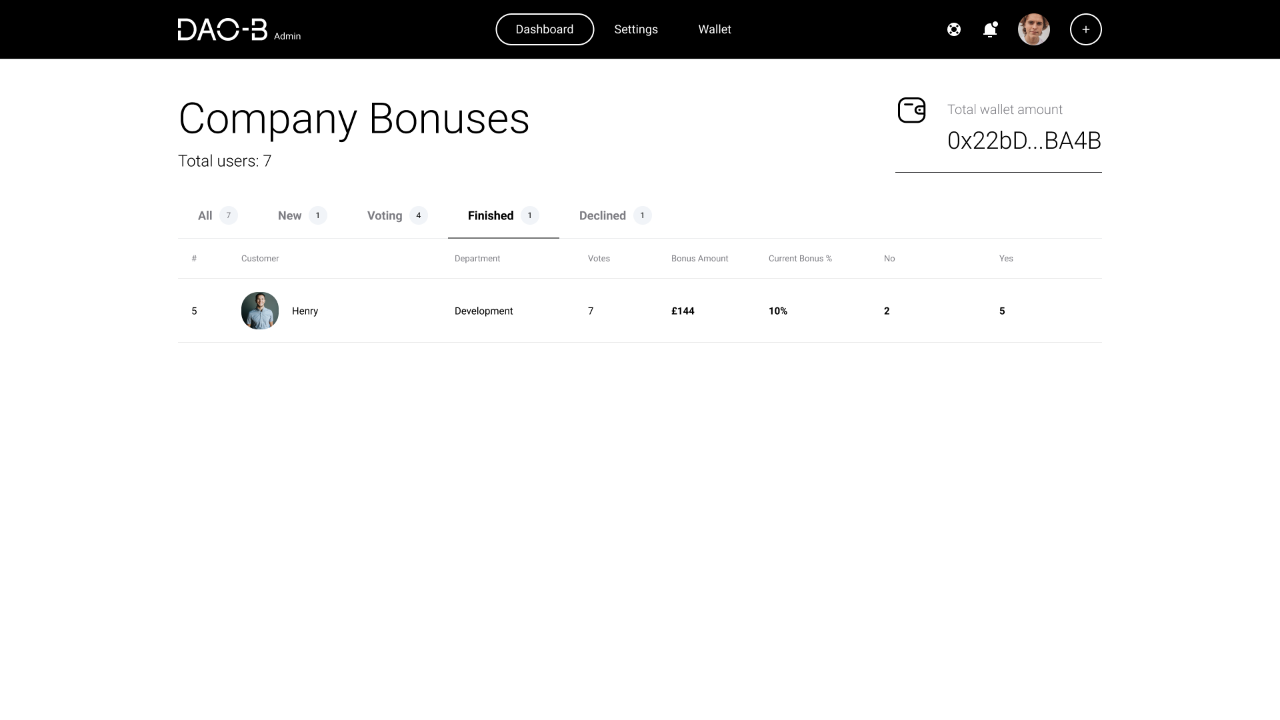
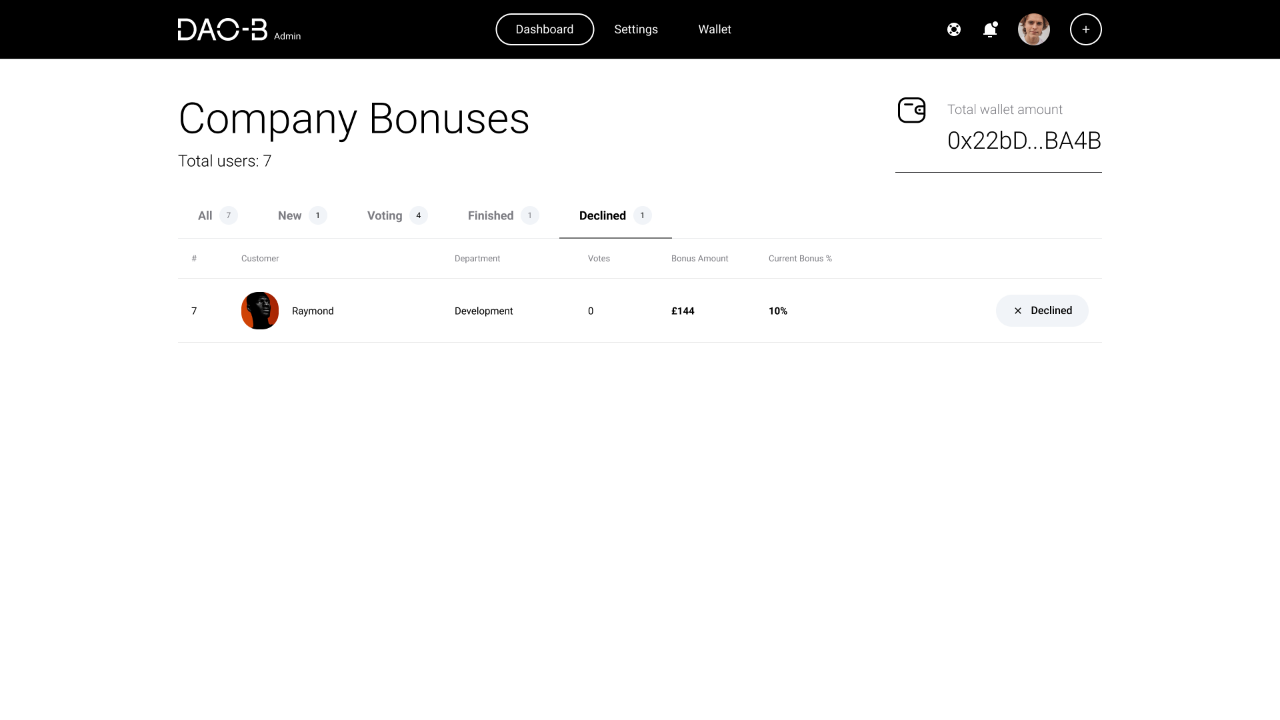
The owner-admin view adds the controls needed to run the imagined system. It separates proposal approval from voting, exposes vote totals after completion, and keeps wallet, settings, and status filters in the same operating layer.
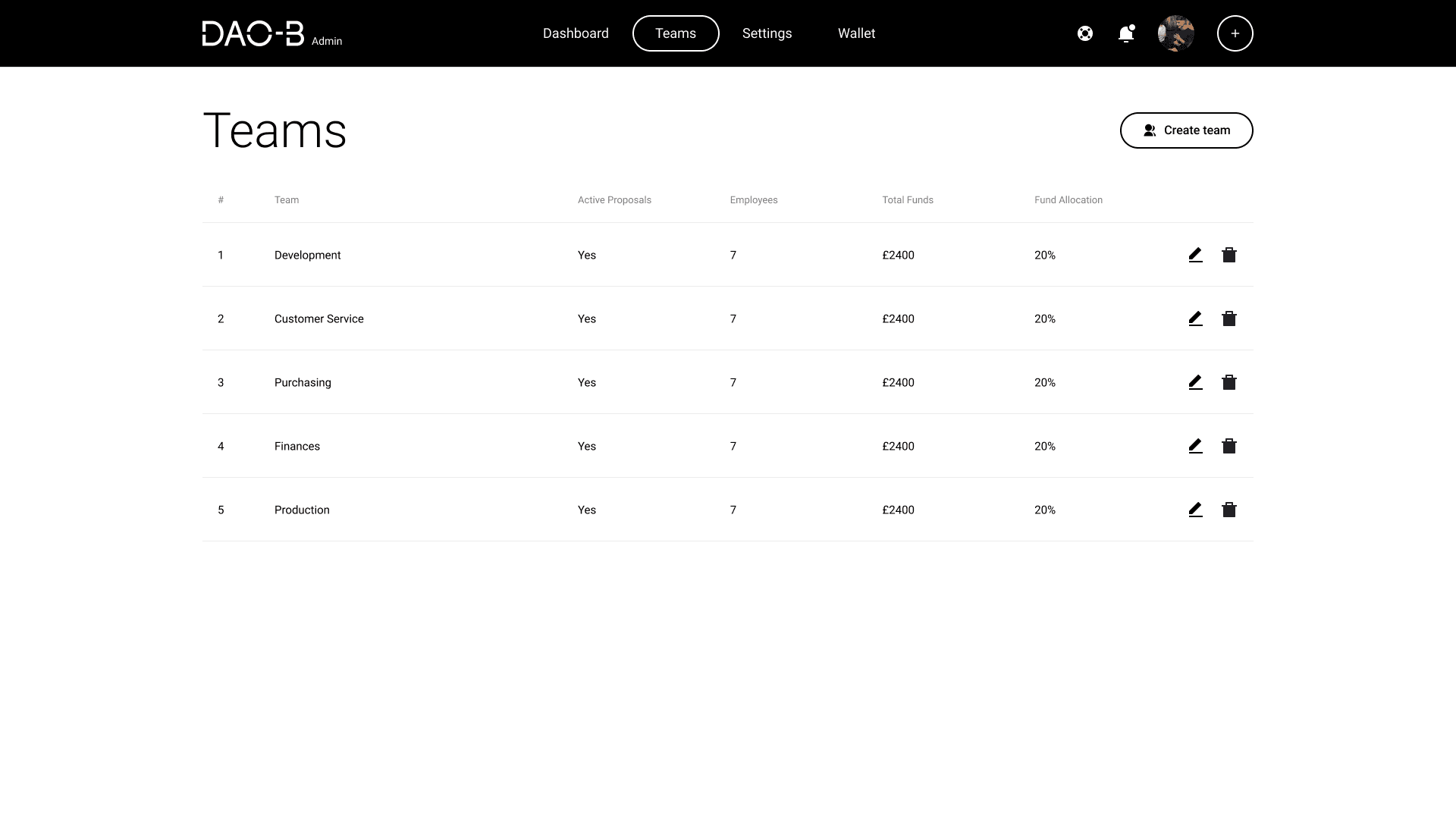
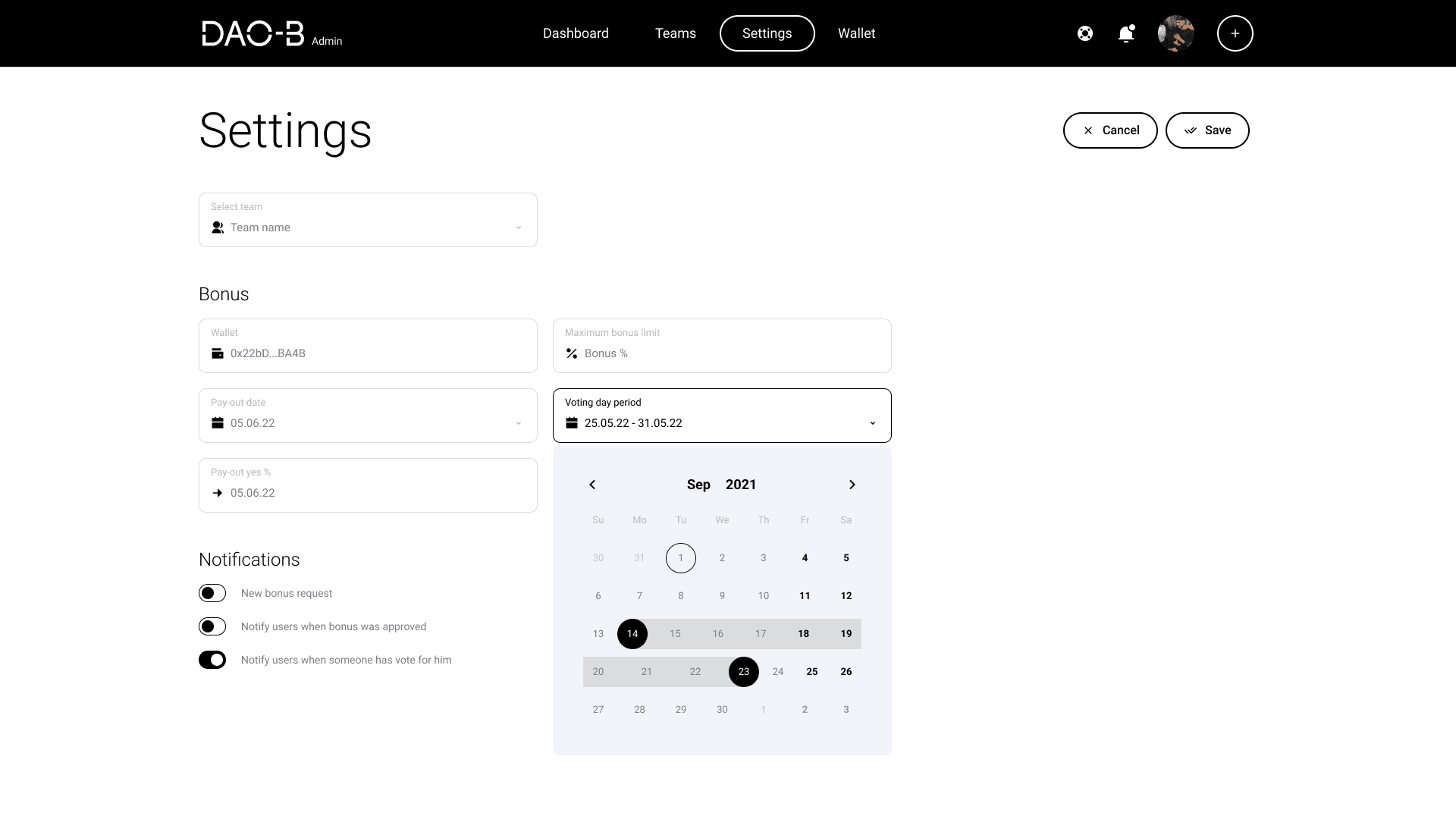
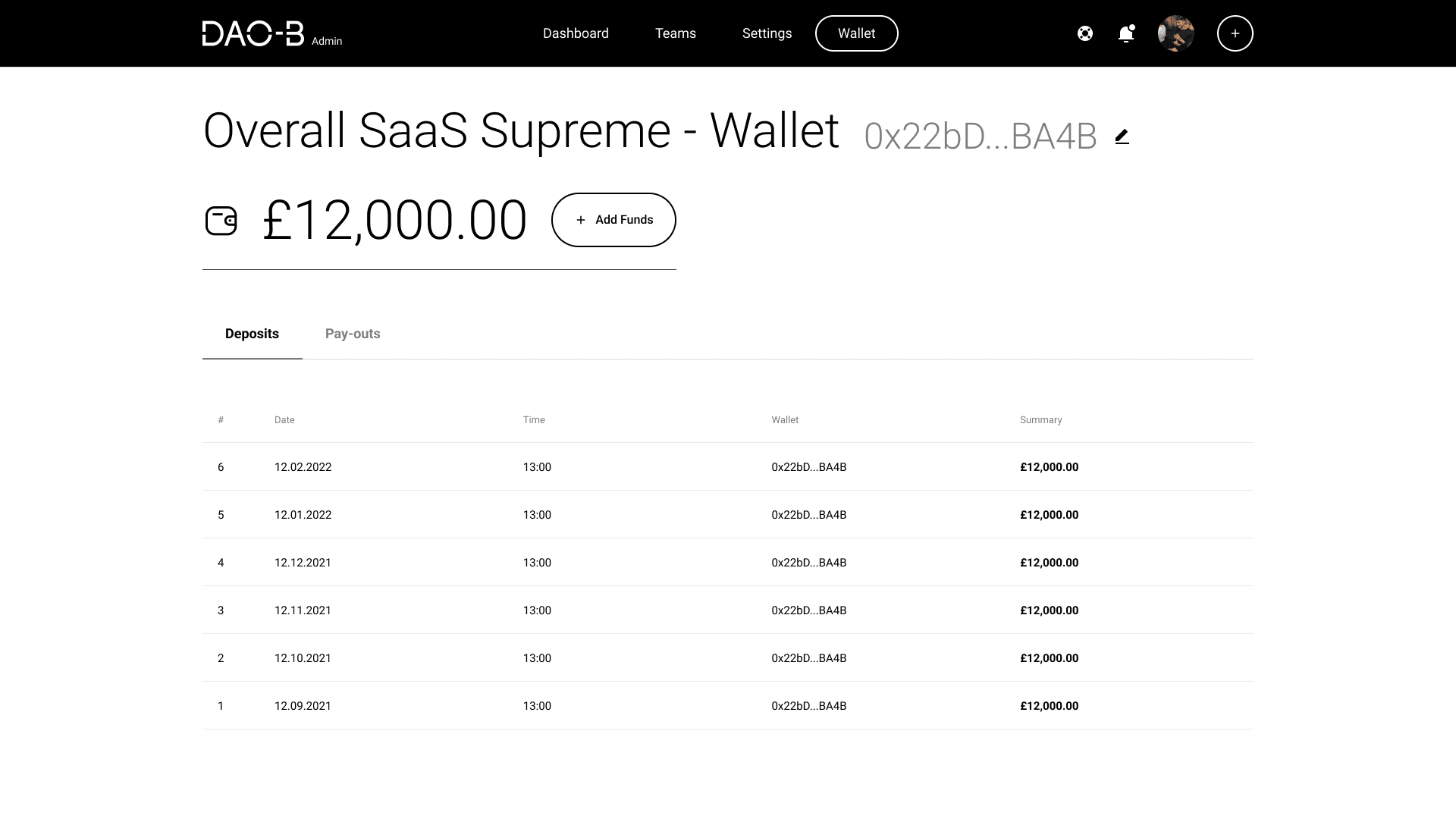
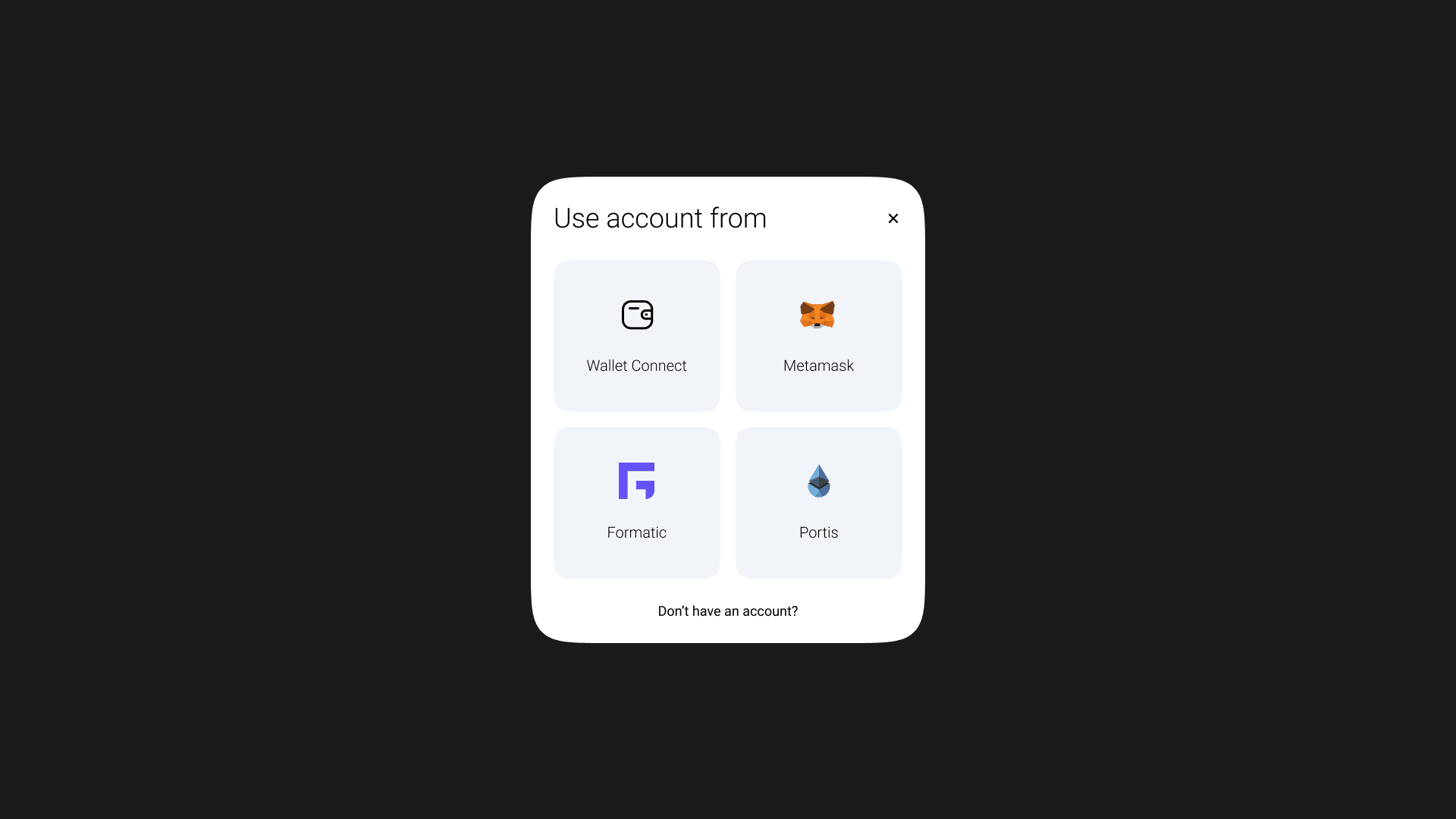
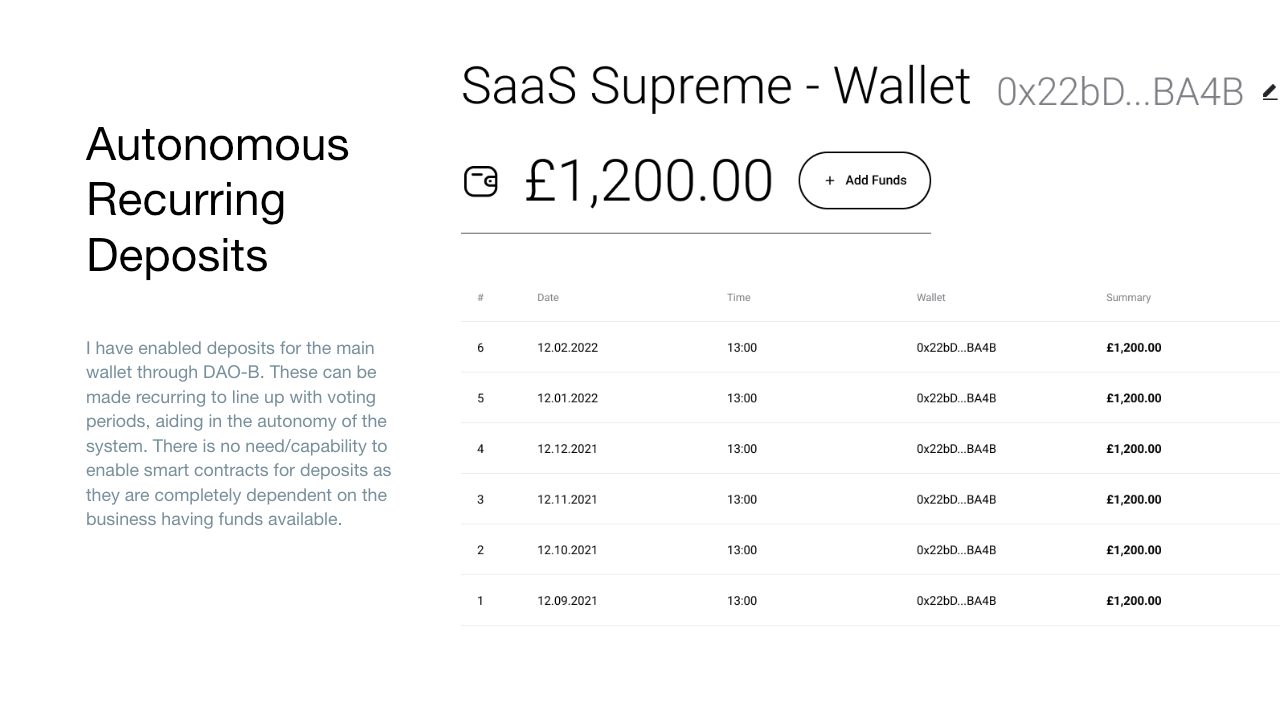
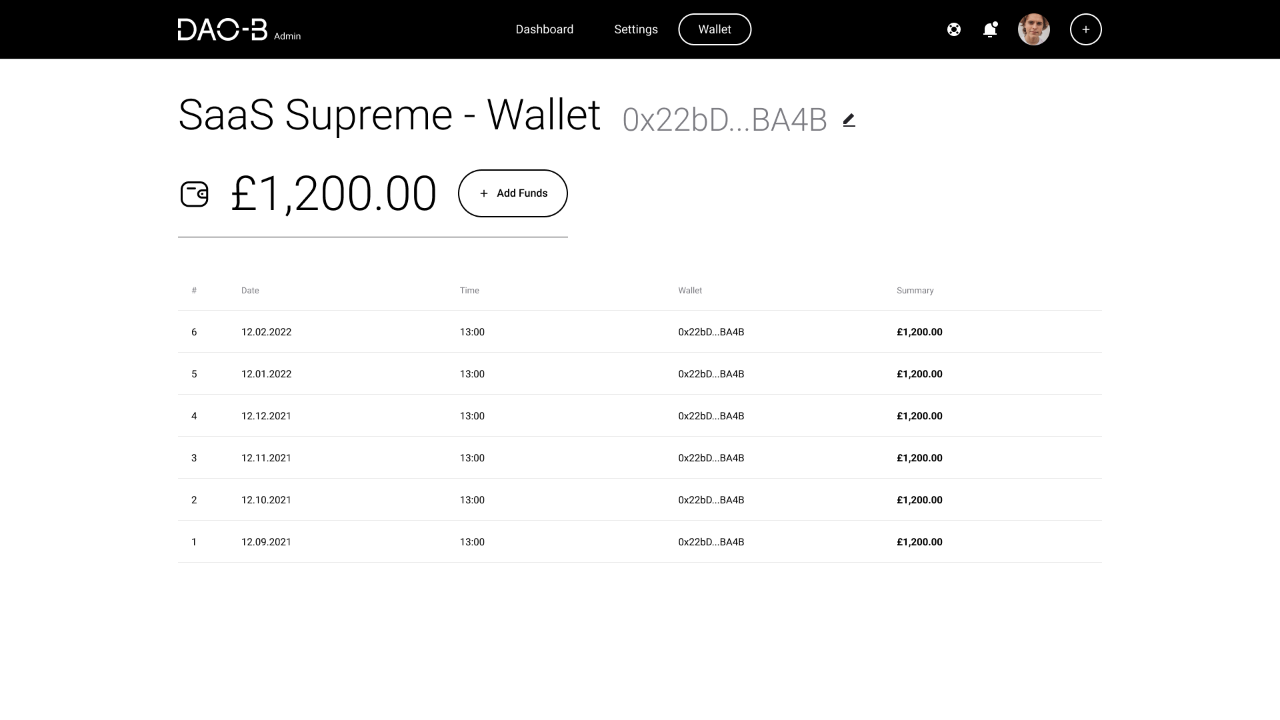
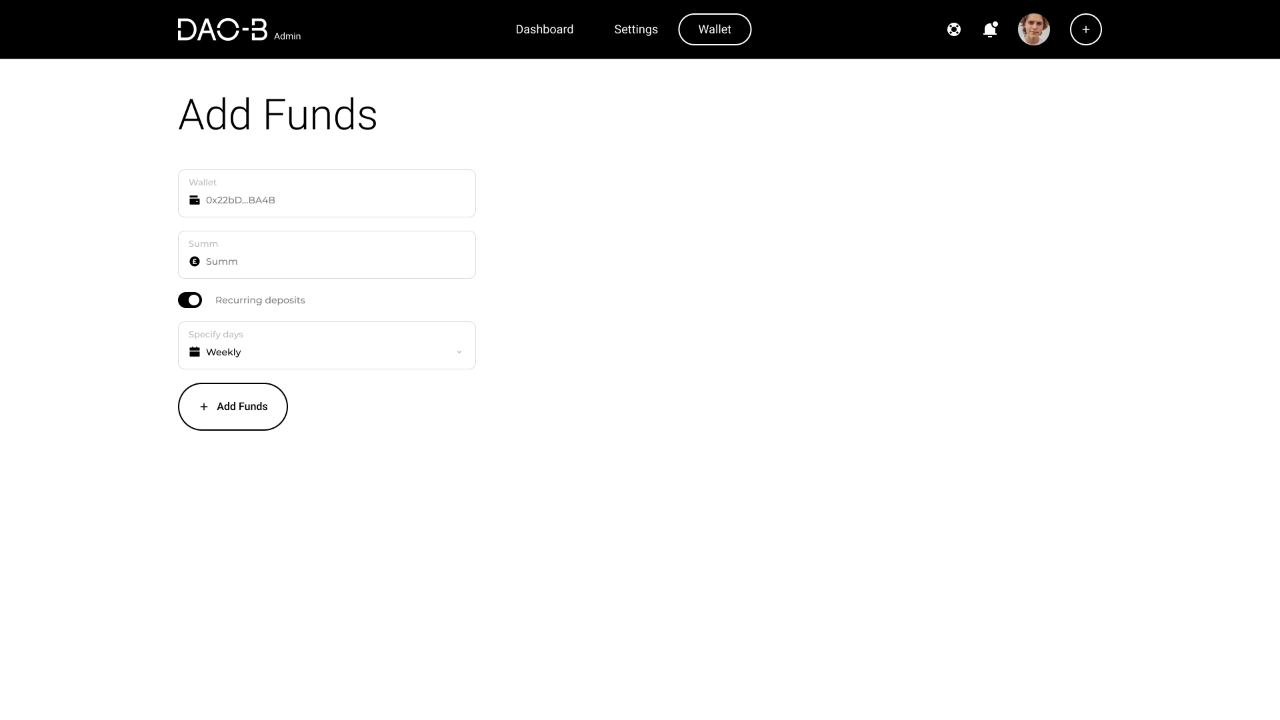
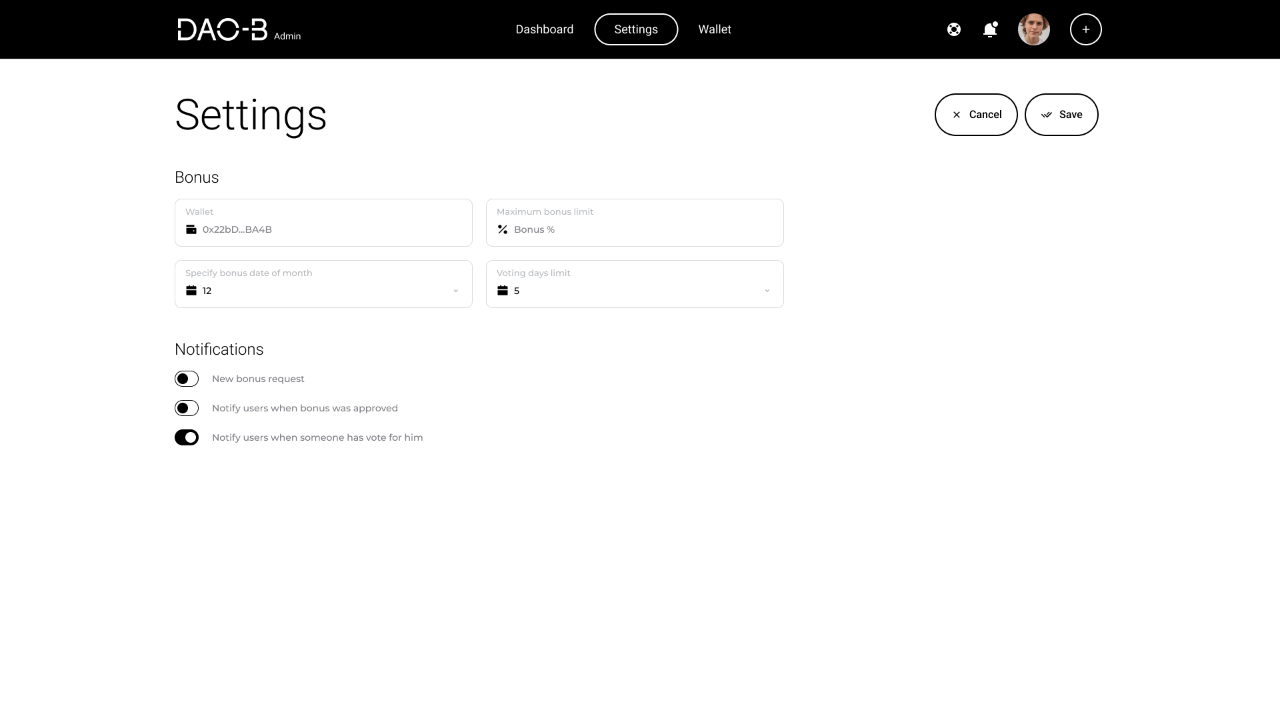
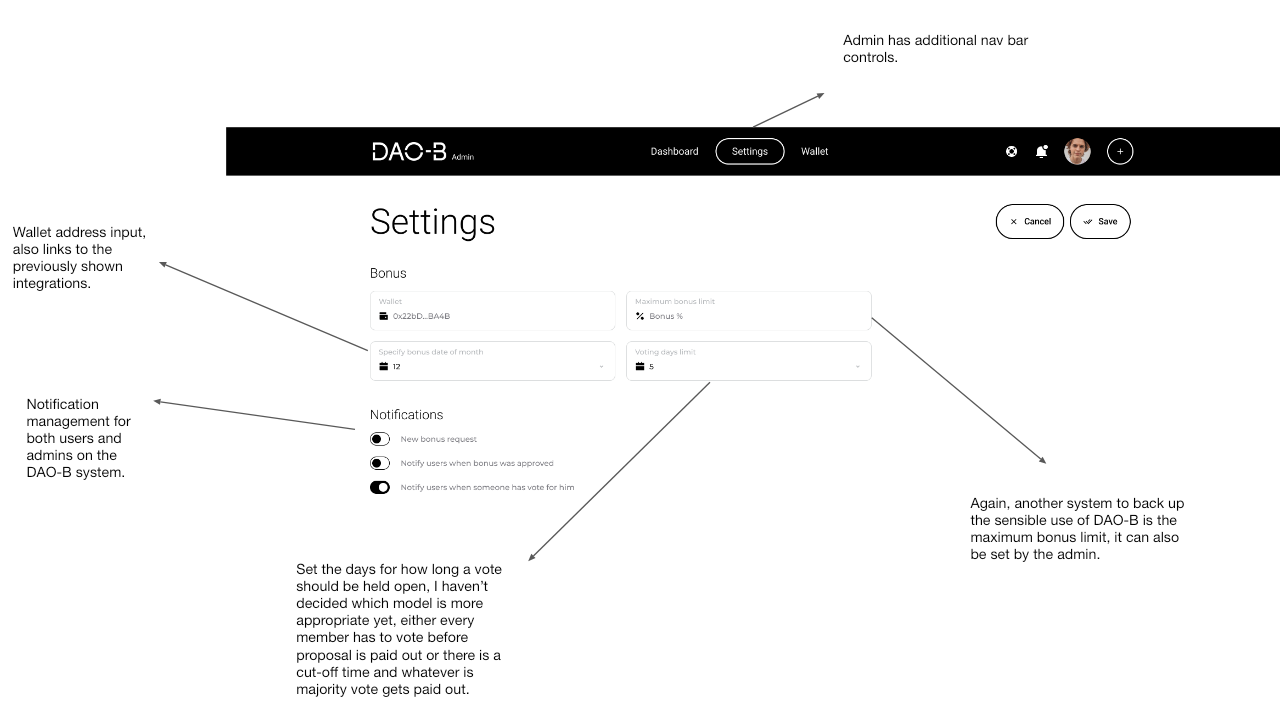
Wallet funding, recurring deposits, bonus limits, voting periods, and notifications sit beside the governance flow rather than forming a separate technical product. This keeps the blockchain layer connected to the operational rules people would actually need to understand.
What this concept demonstrates
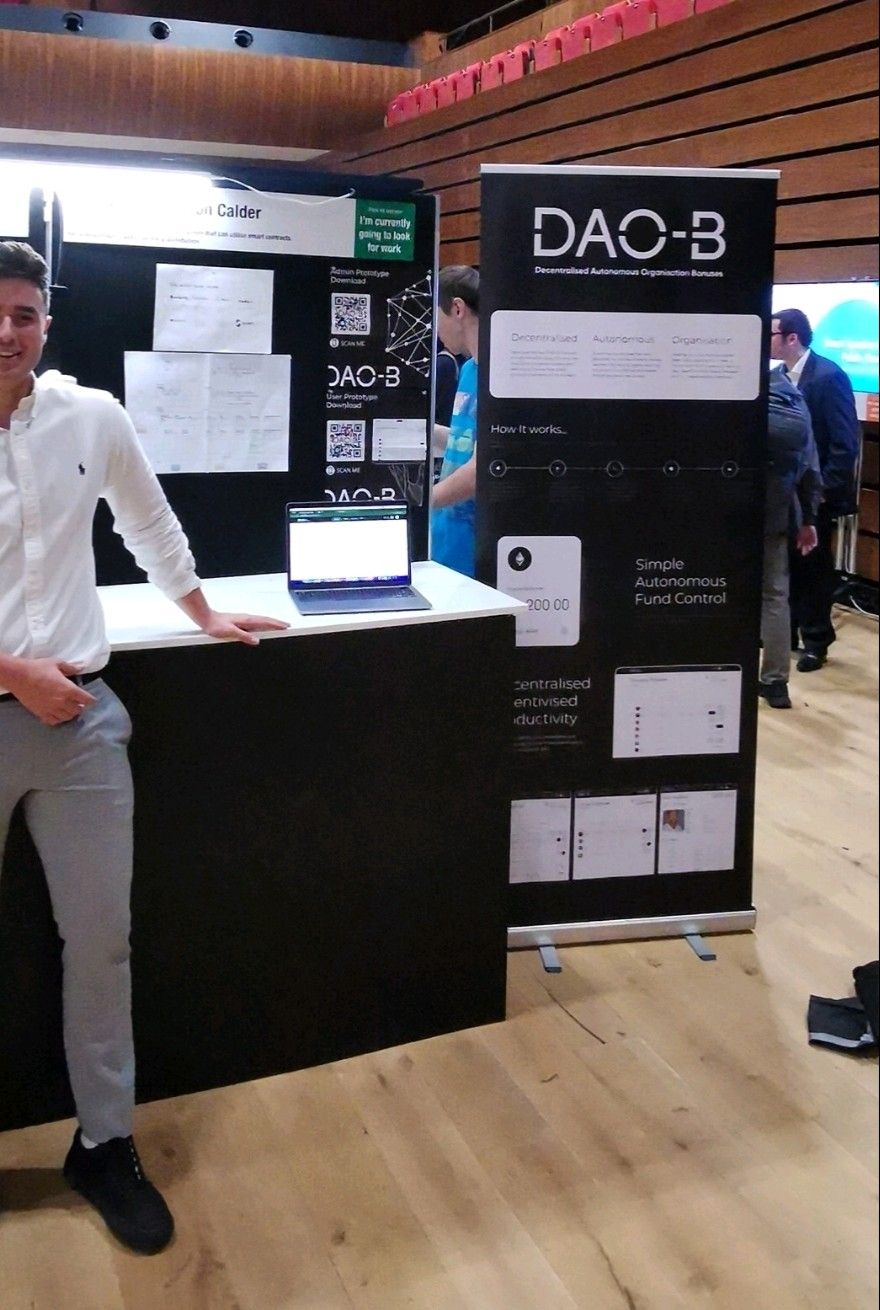
The project produced a 31-slide research presentation and a staff-and-admin prototype covering proposals, voting, wallets, user management and treasury controls. My contribution covered research, product framing and interaction design.
Using familiar workflows to keep governance visible
I translated proposals, voting and shared funds into familiar staff and admin patterns so the organisational decision stayed visible instead of letting blockchain mechanics dominate the experience.
Pitch deck · 31 slides
DAO-B: Original research and product presentation
Cameron Calder's original 31-slide presentation, moving from DAO and Ethereum research into a product concept for staff bonuses, voting, administration, wallets and settings.
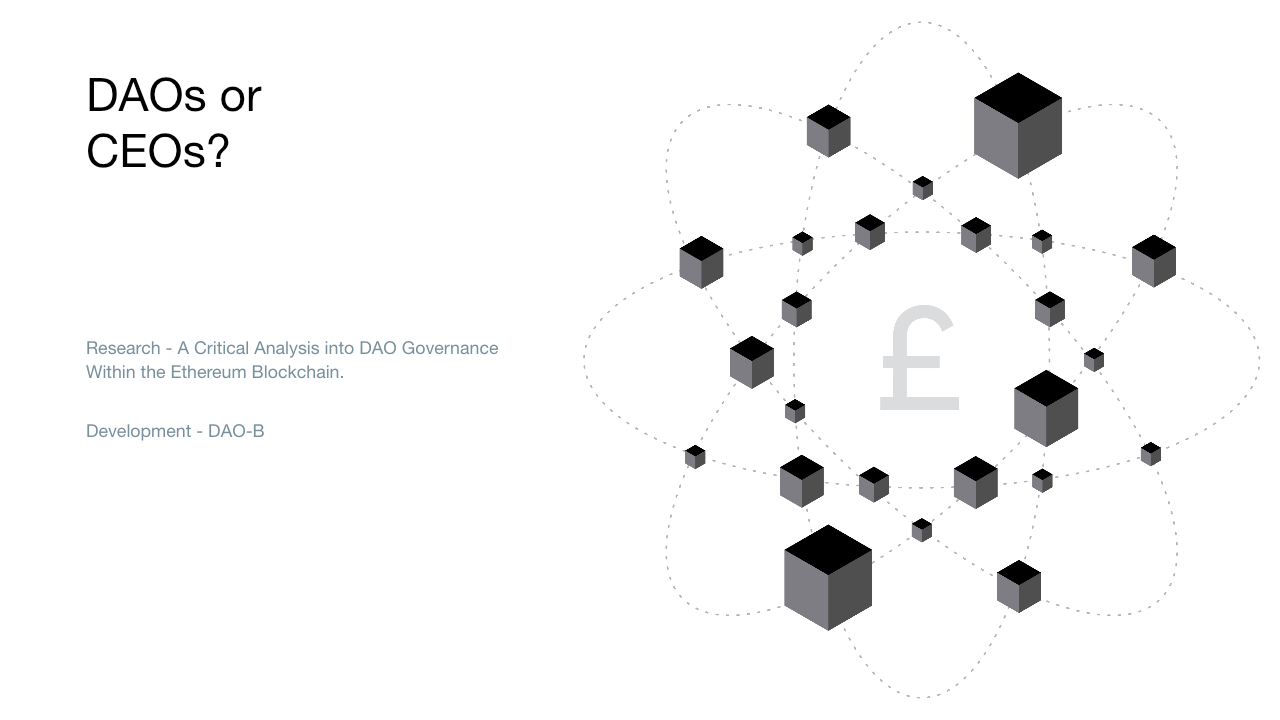
01DAOs or CEOs? 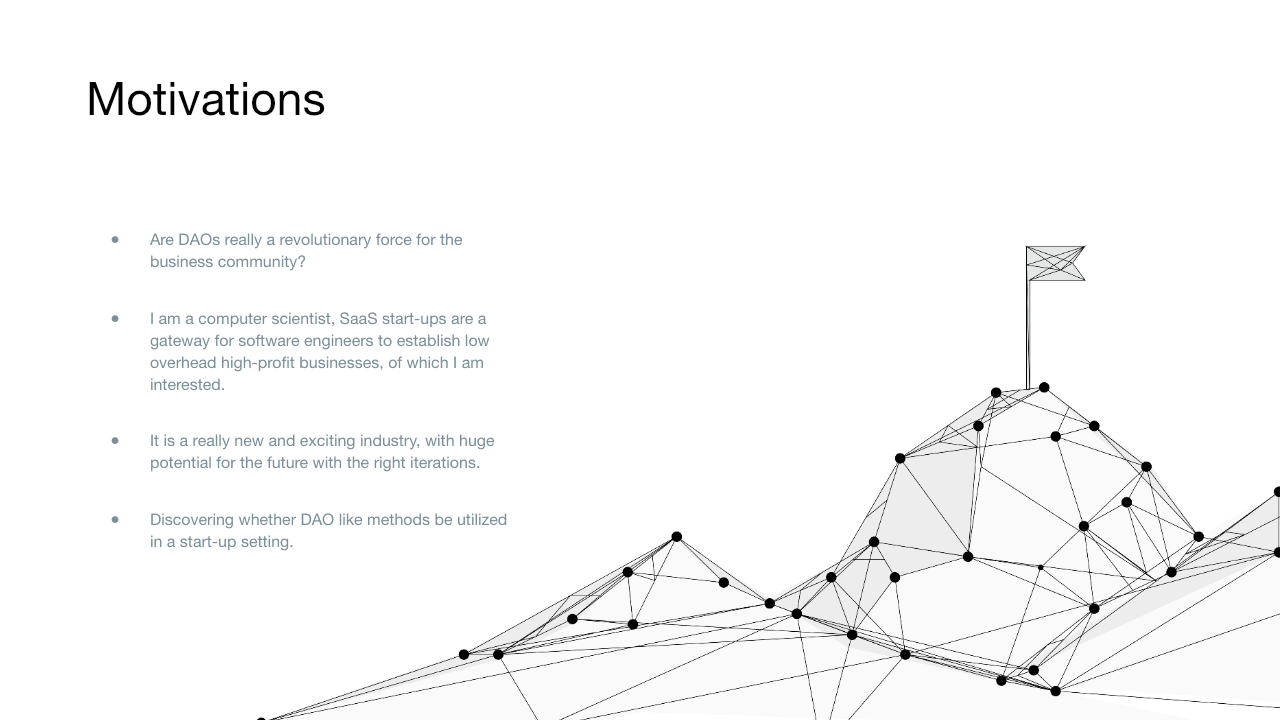
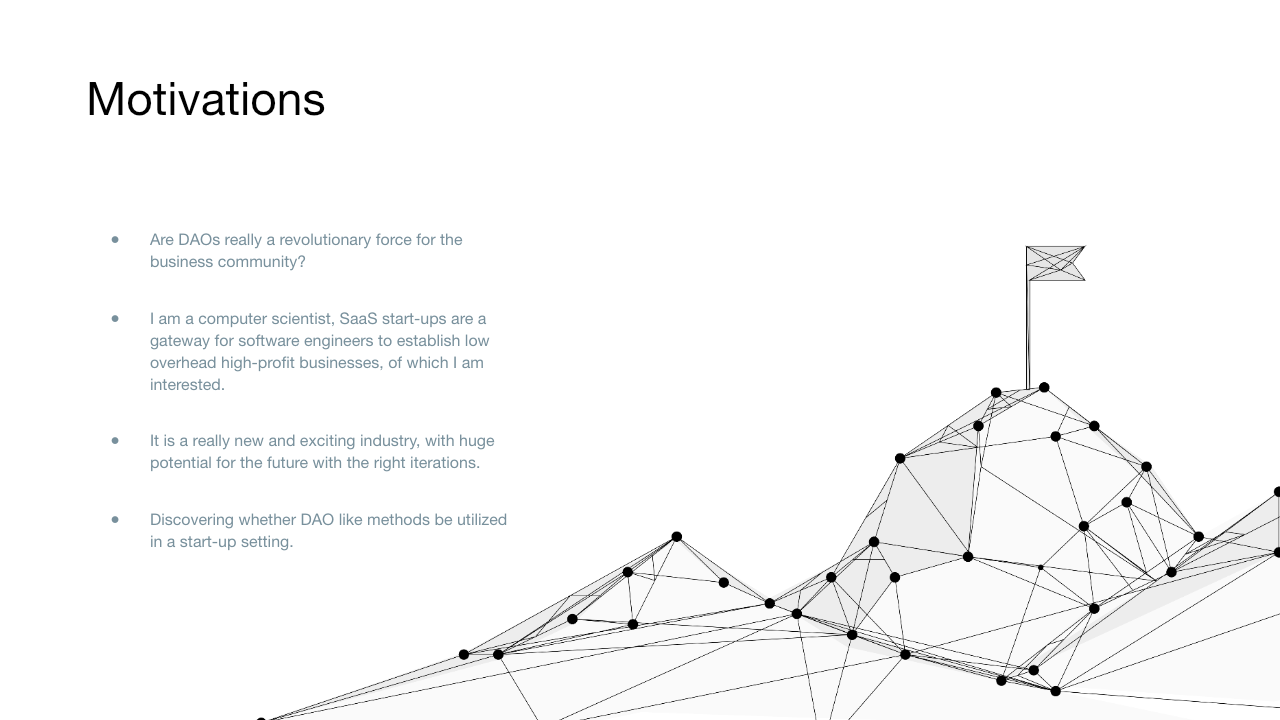
02Motivations for exploring DAOs 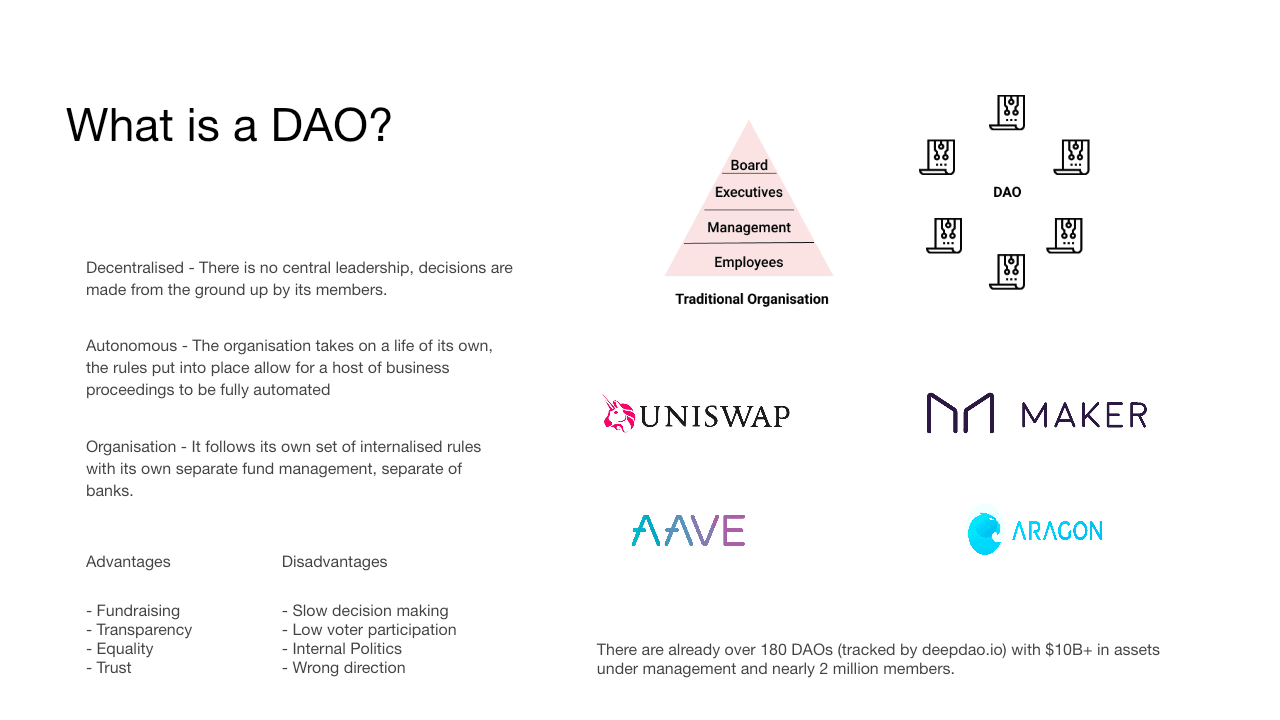
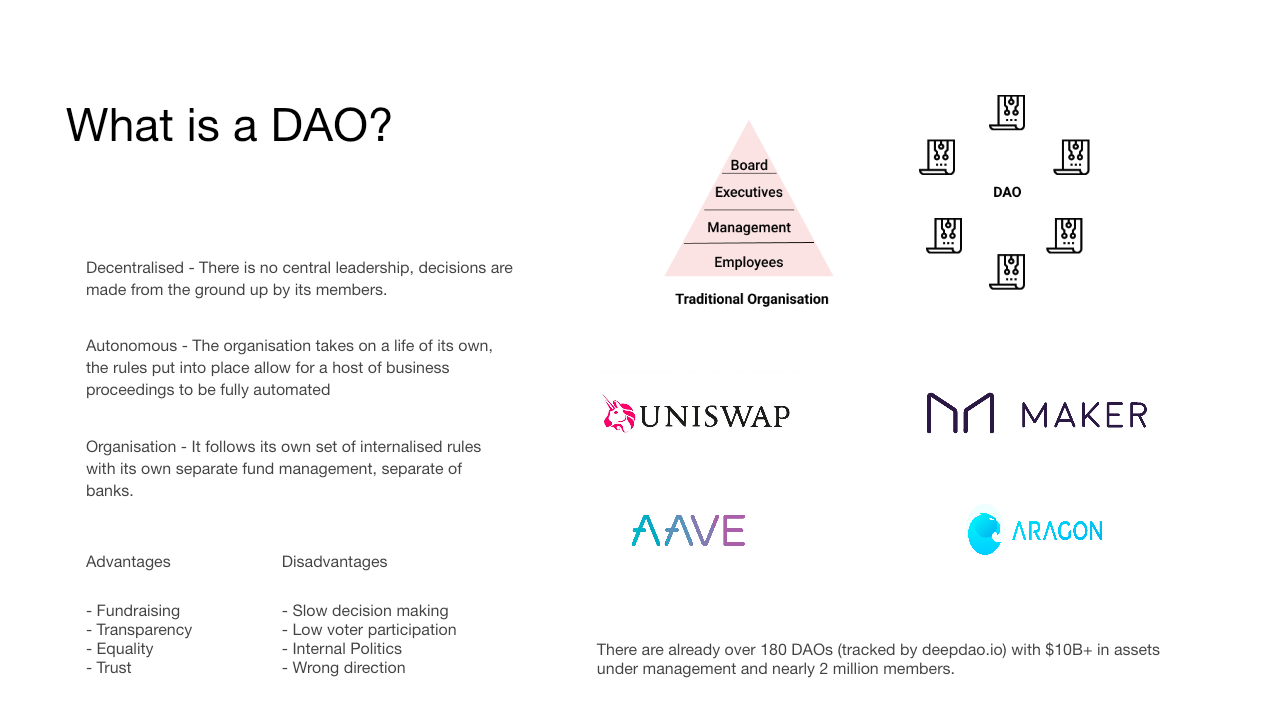
03What is a DAO? 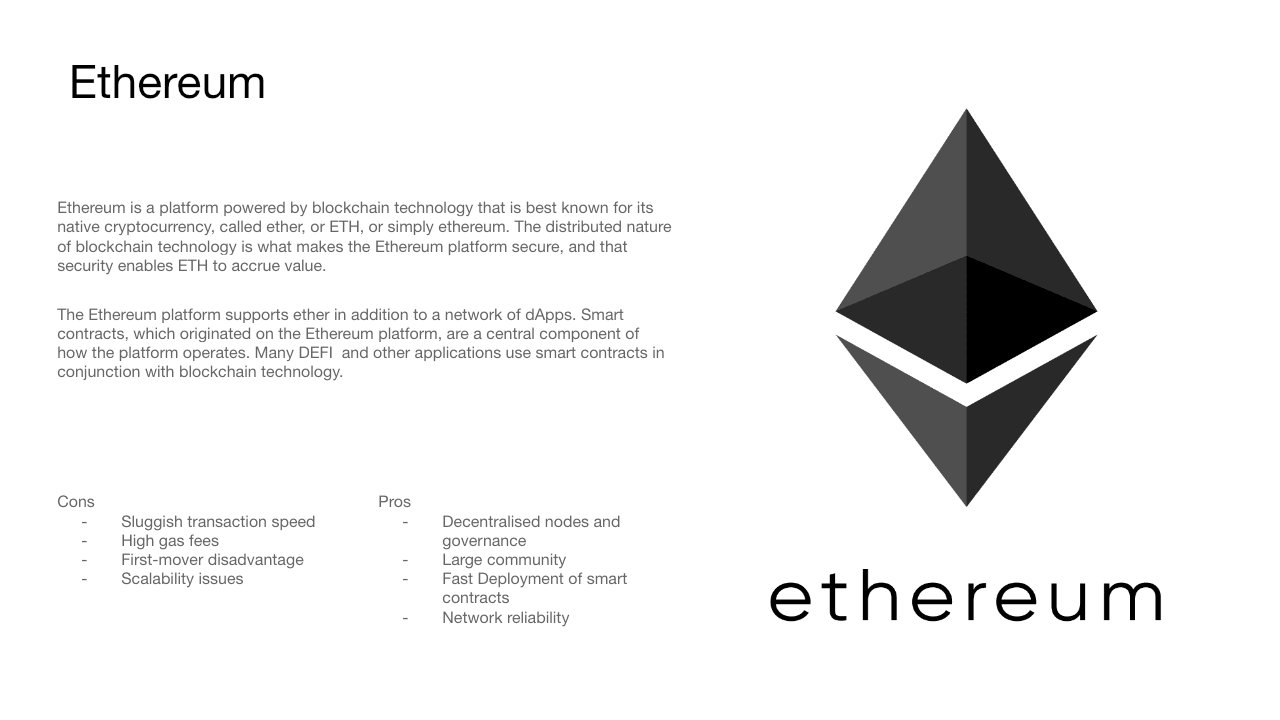
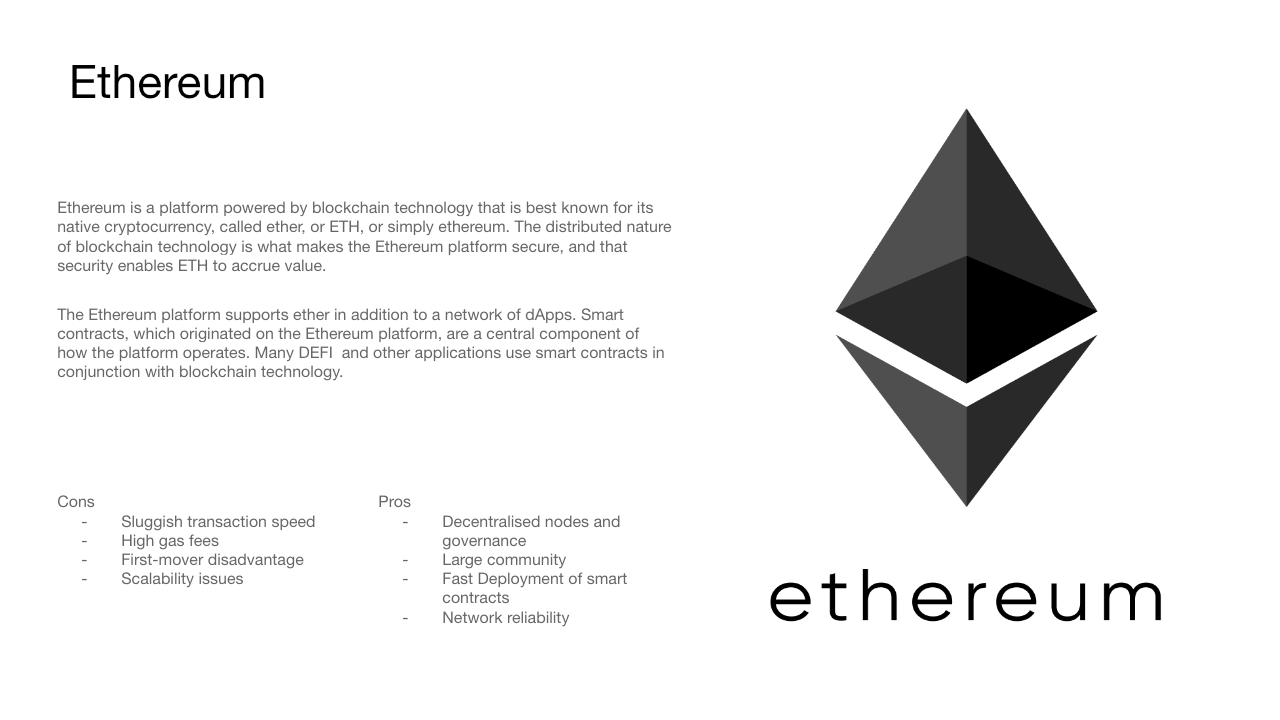
04Ethereum foundations 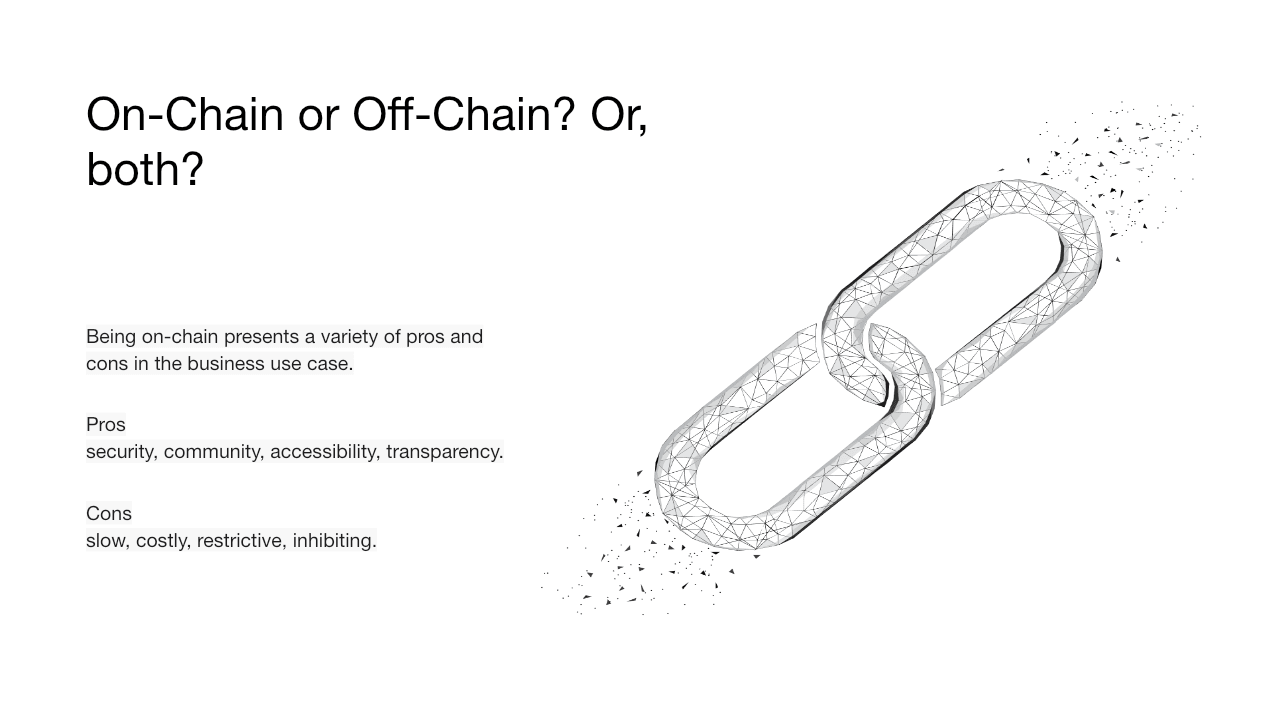
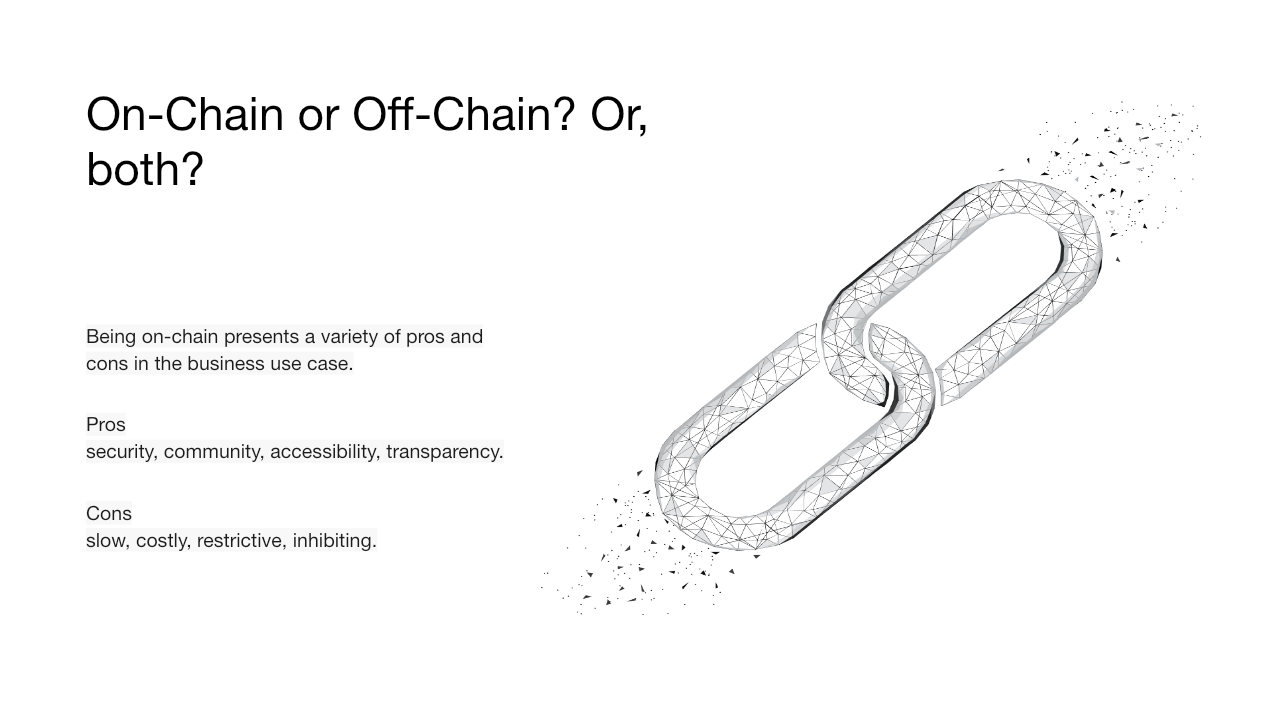
05On-chain or off-chain? 
06Introducing DAO-B 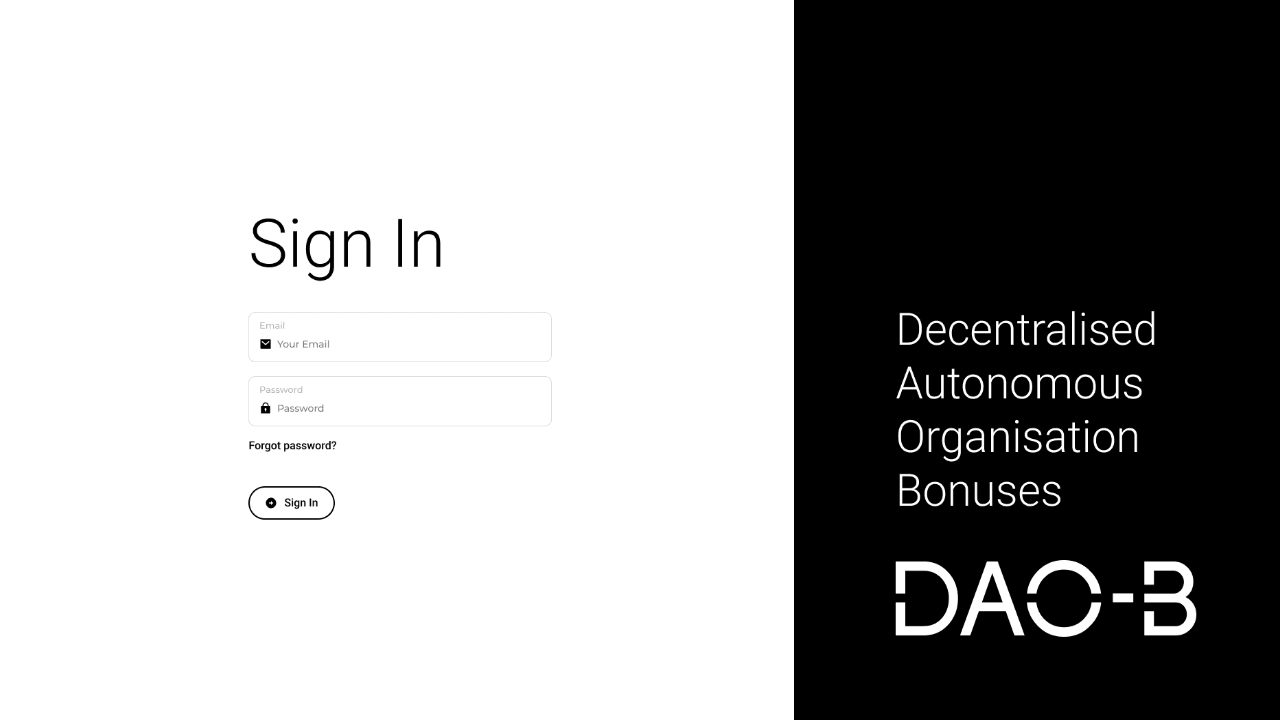
07Sign in 
08Users 
09Voting panel 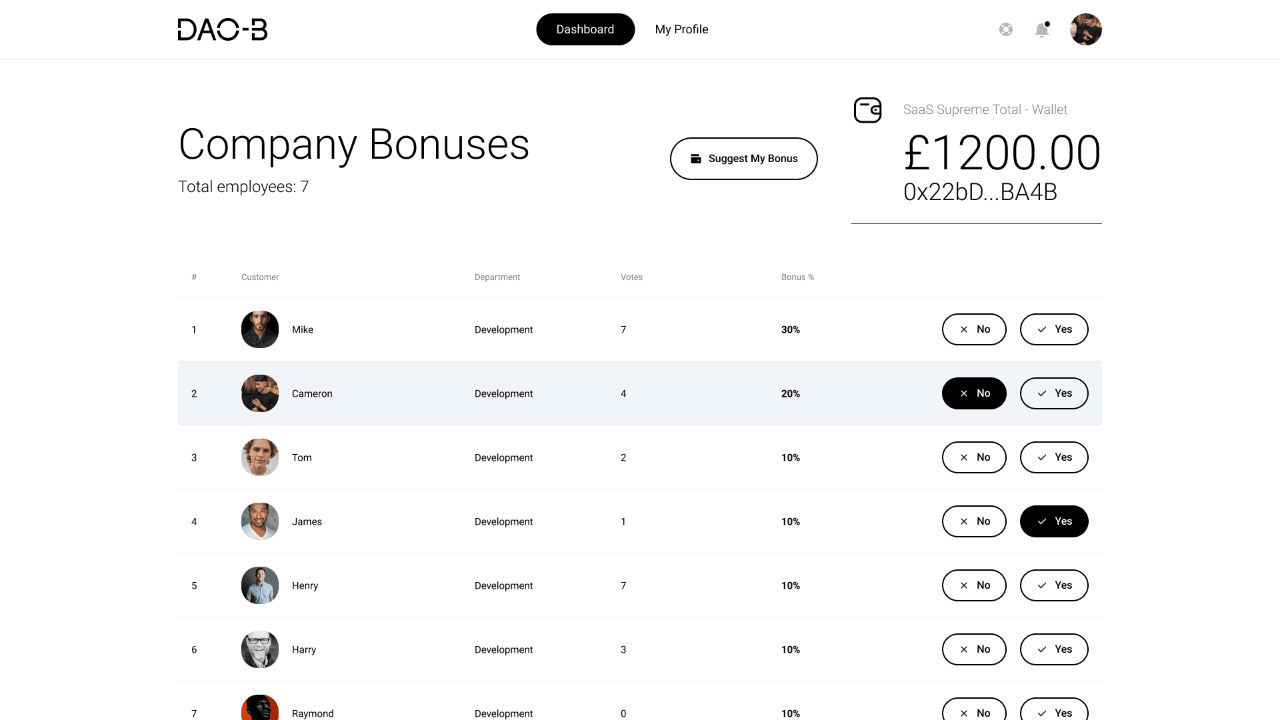
10Company bonuses 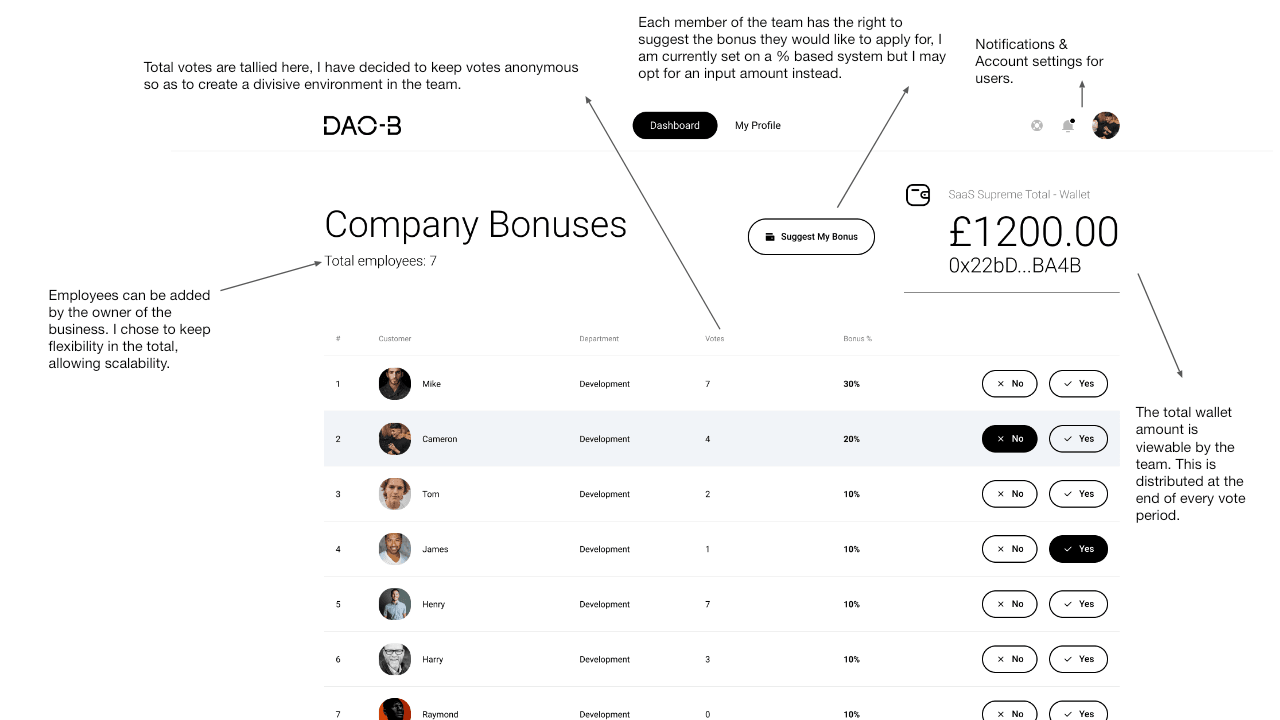
11Company bonuses, annotated 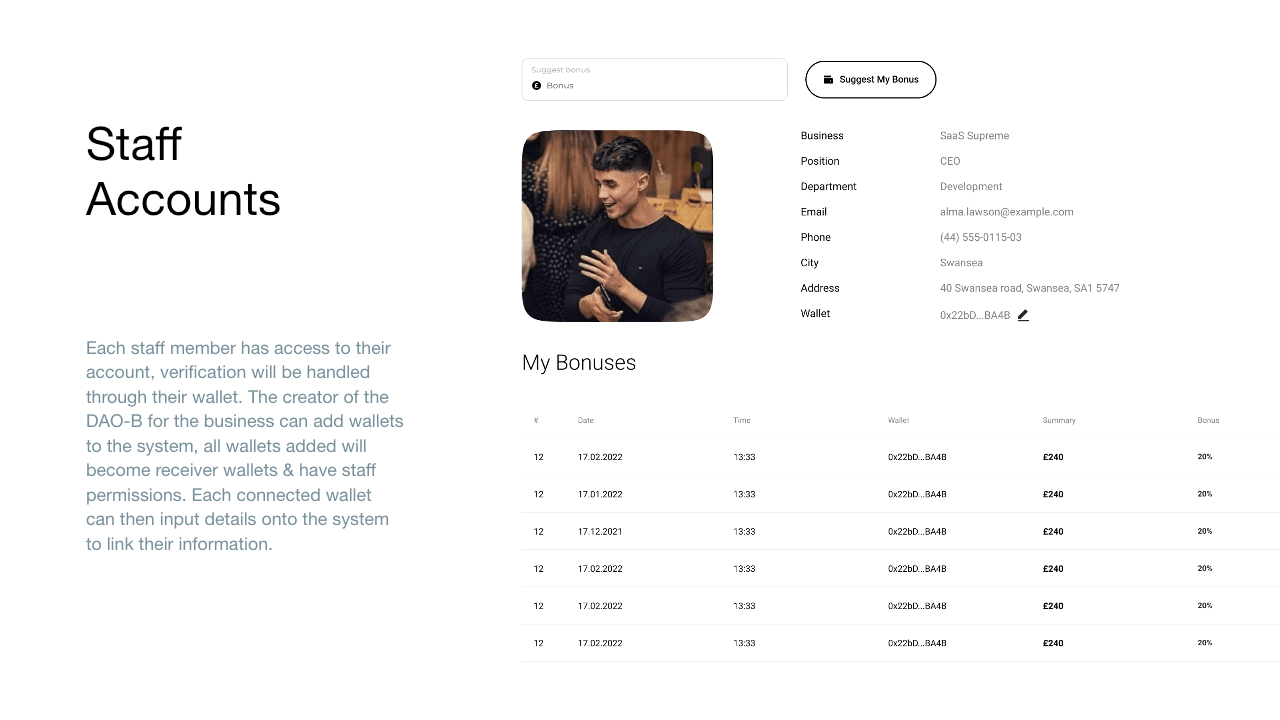
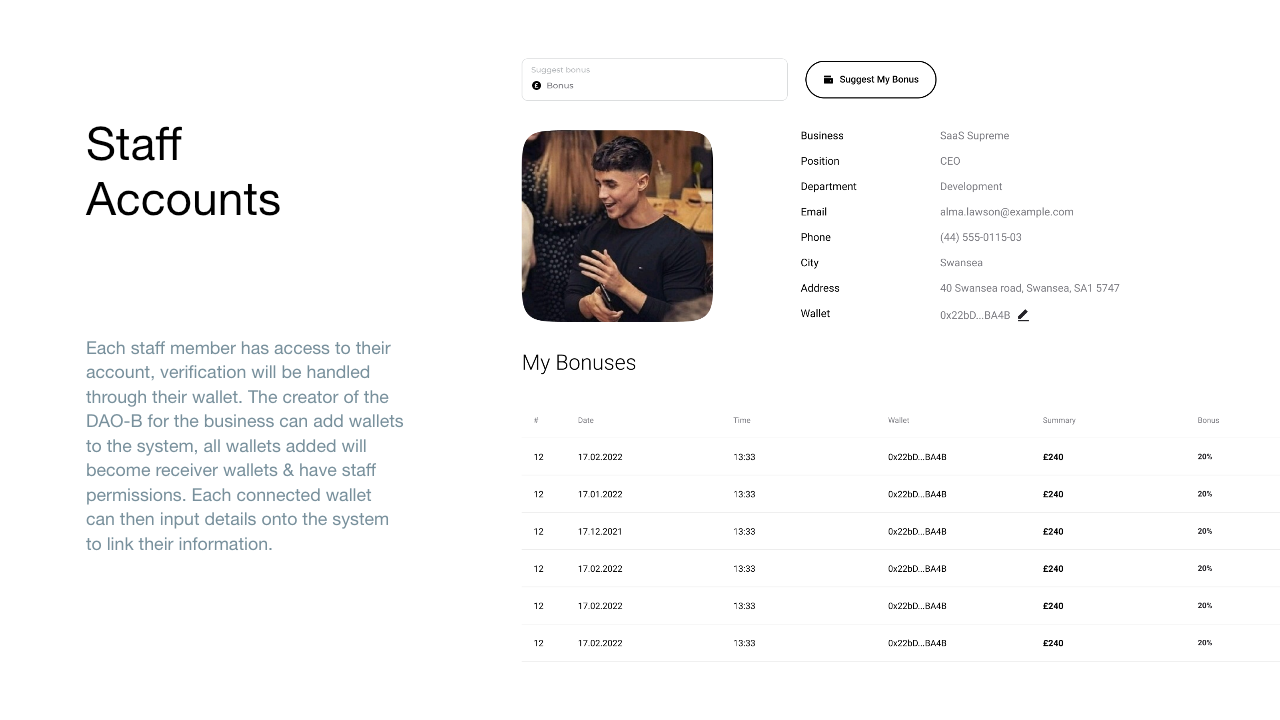
12Staff accounts 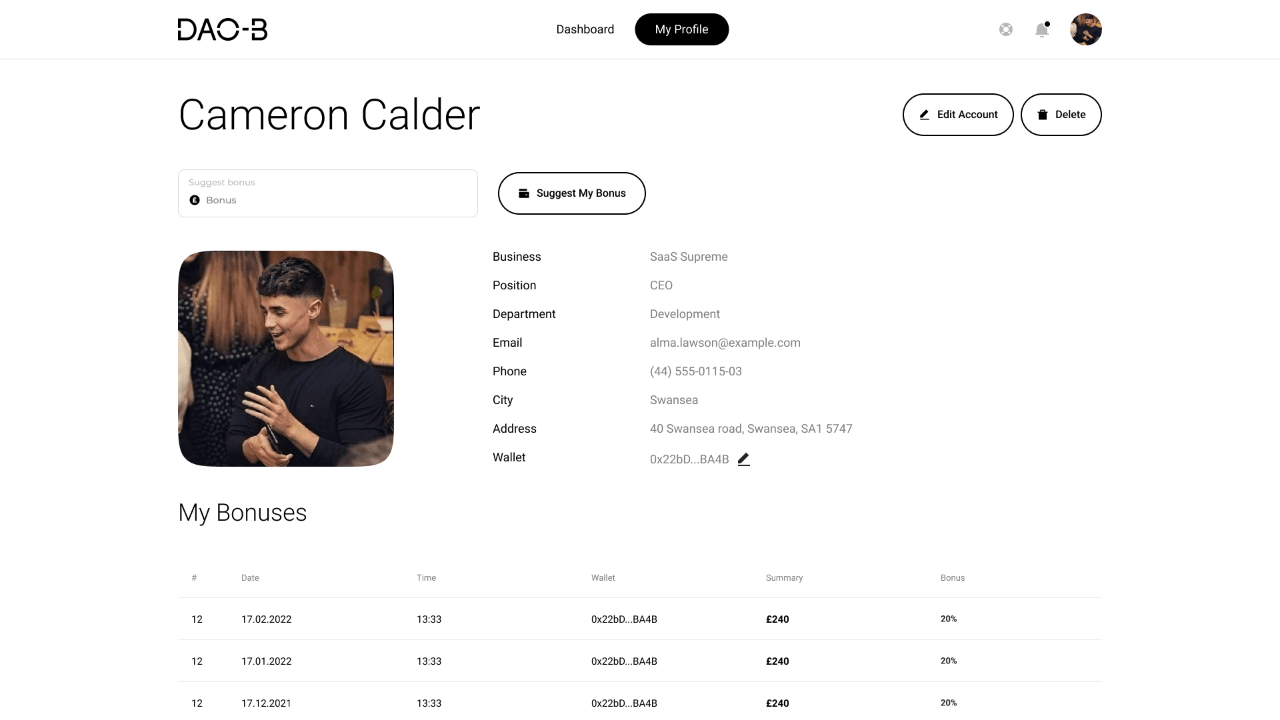
13Staff profile and bonus history 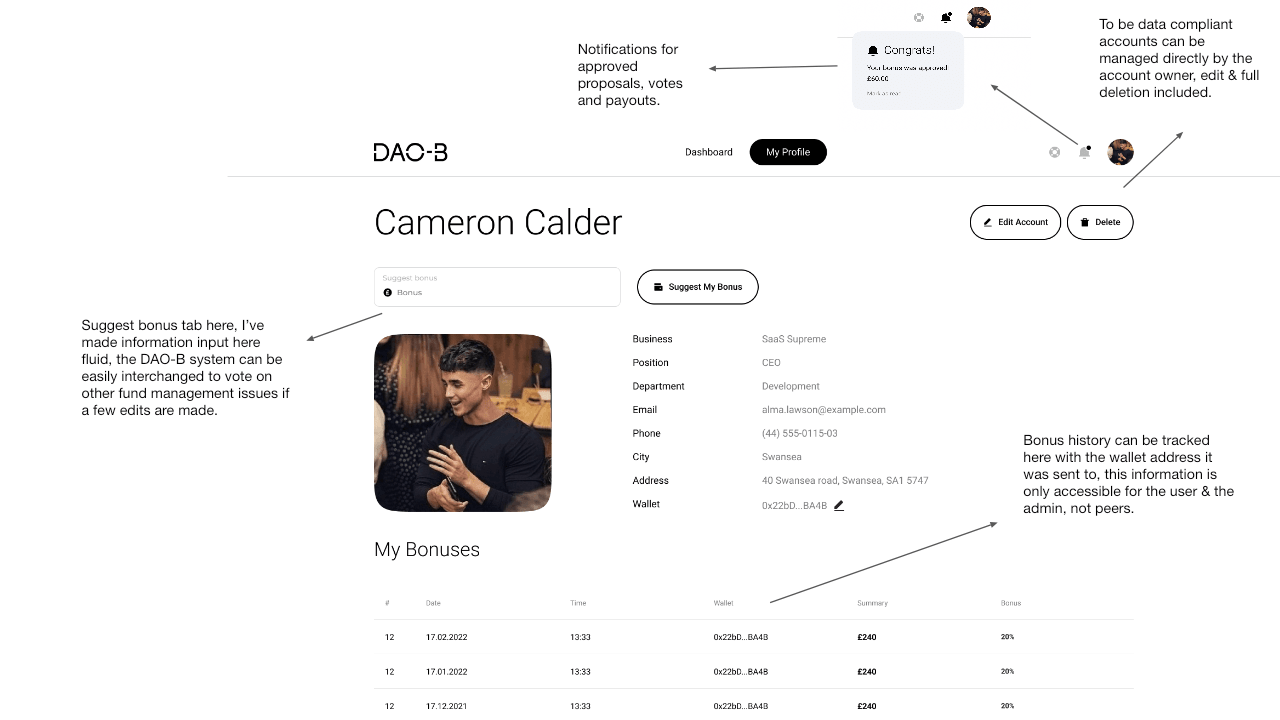
14Staff profile, annotated 
15Owner and admin 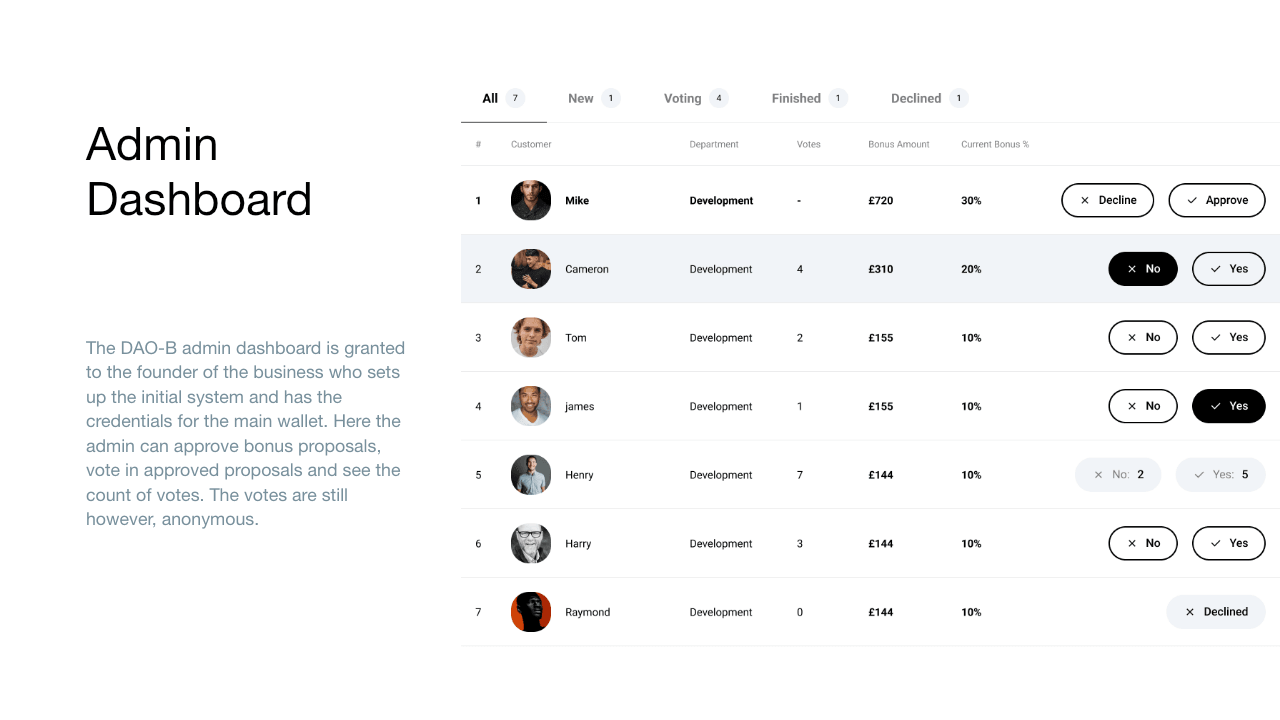
16Admin dashboard 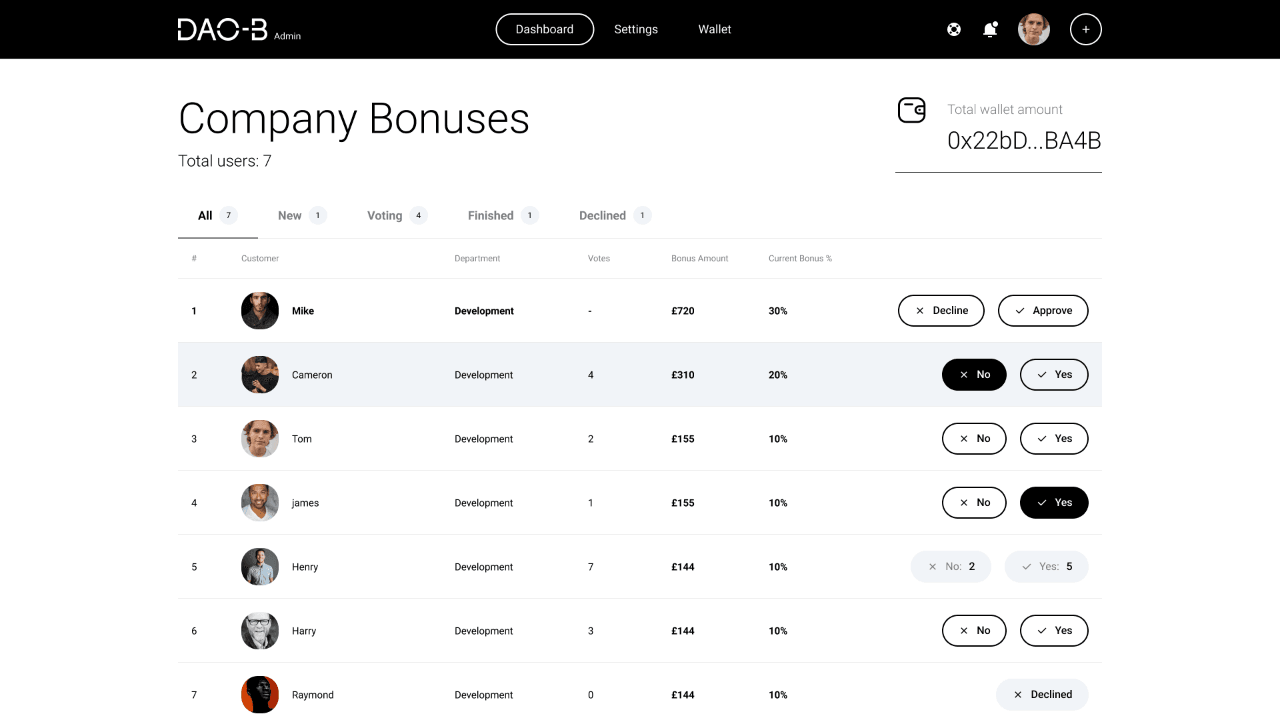
17Company bonuses admin view 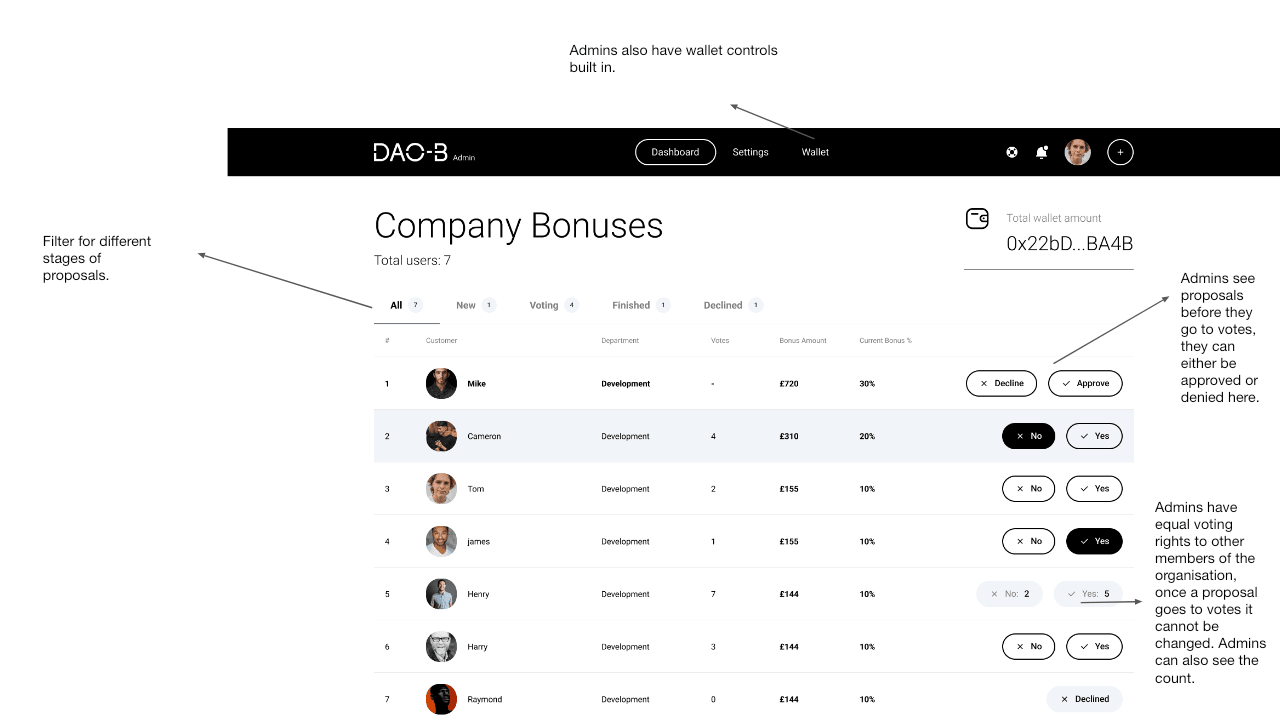
18Admin dashboard, annotated 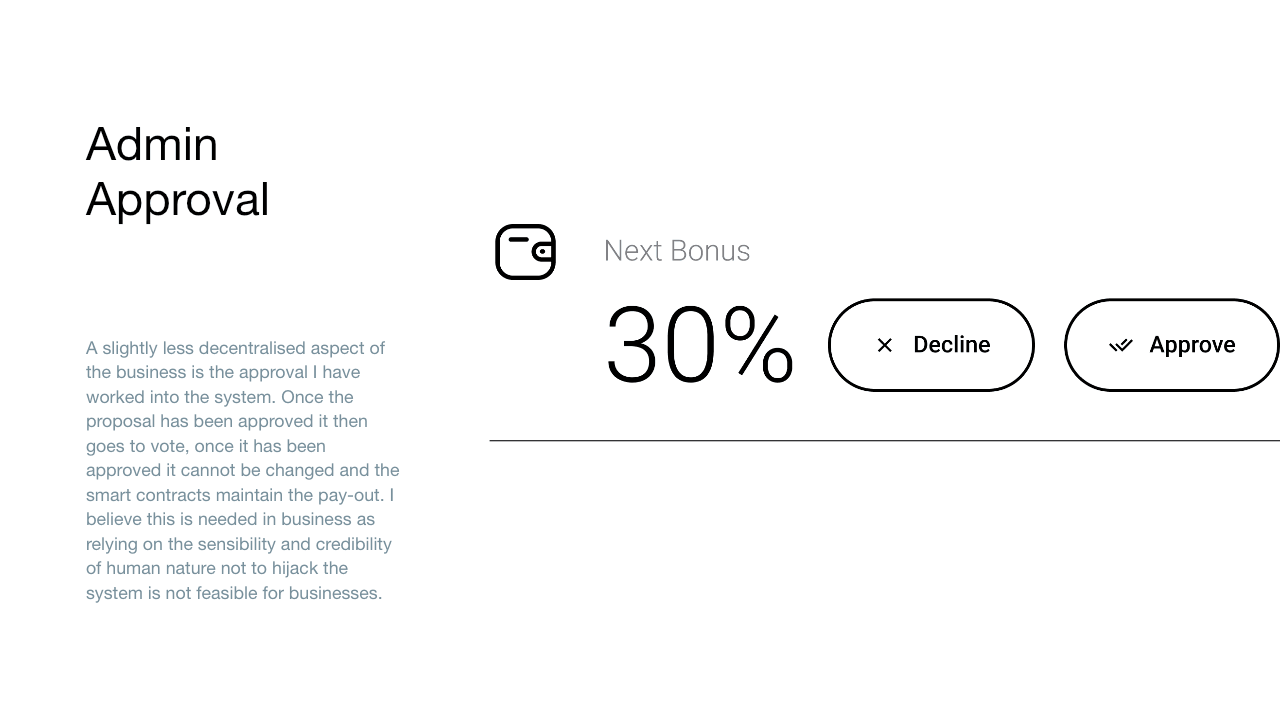
19Admin approval 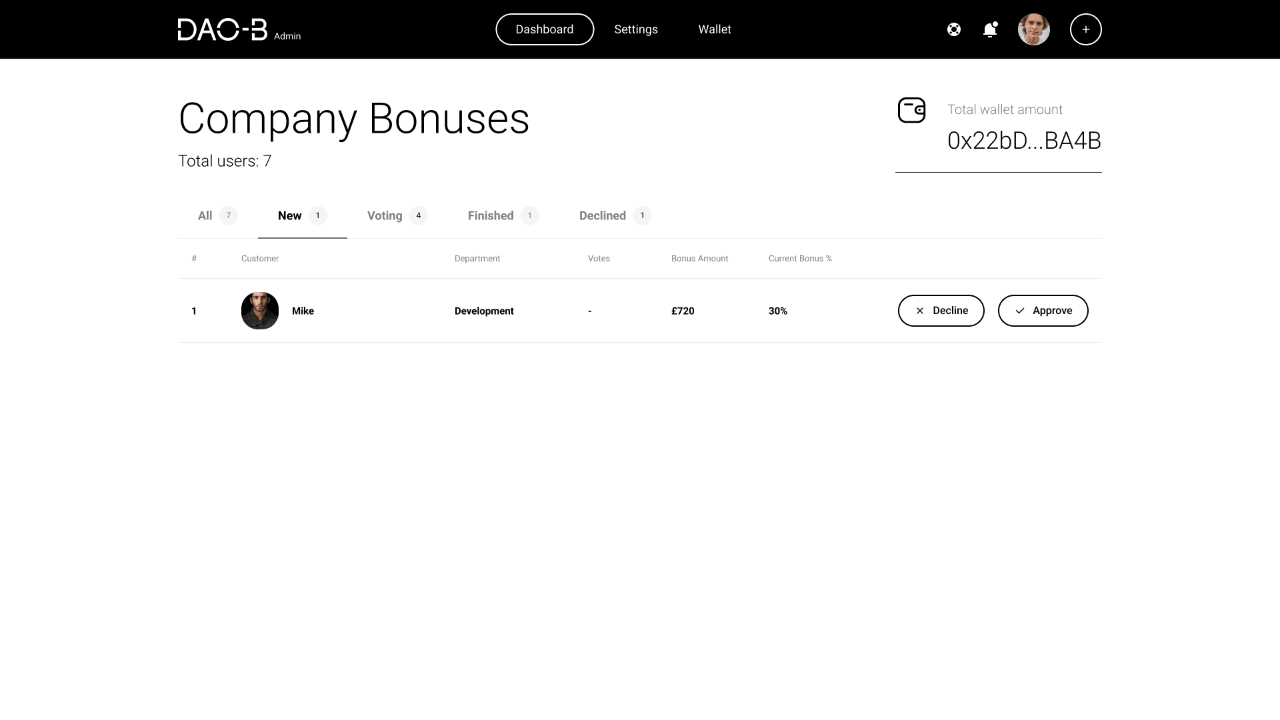
20New bonus proposals 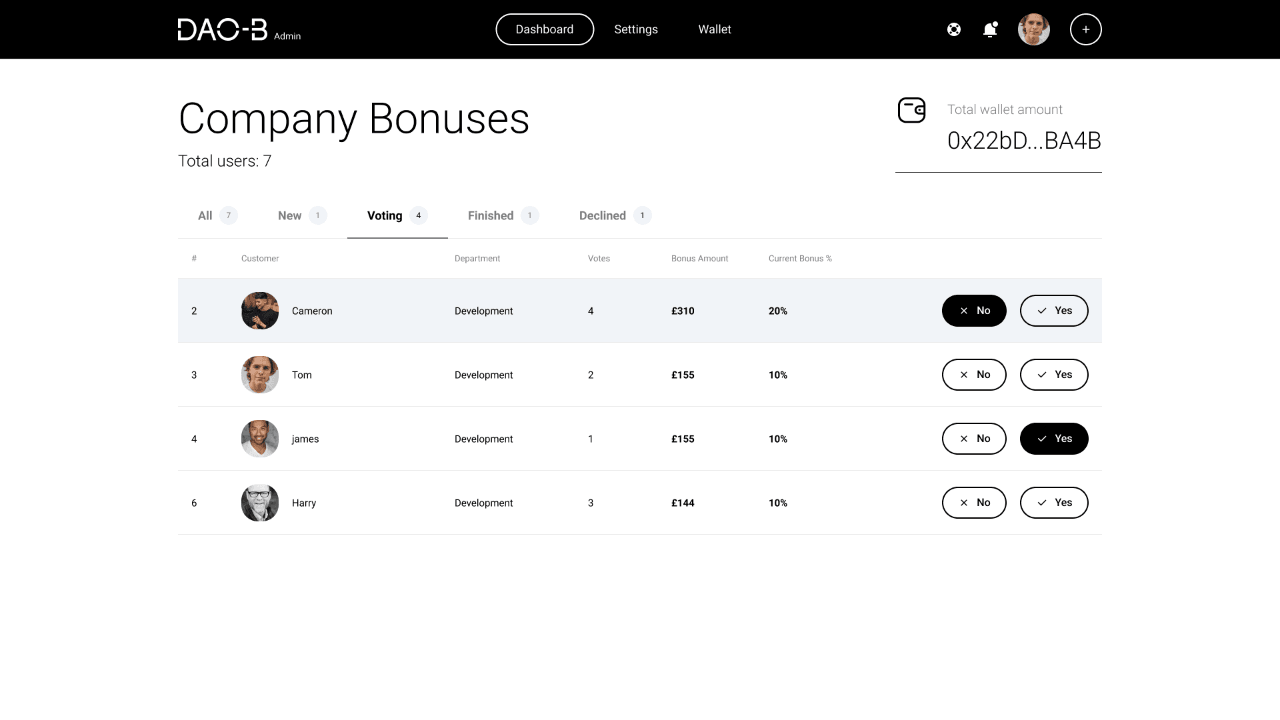
21Proposals in voting 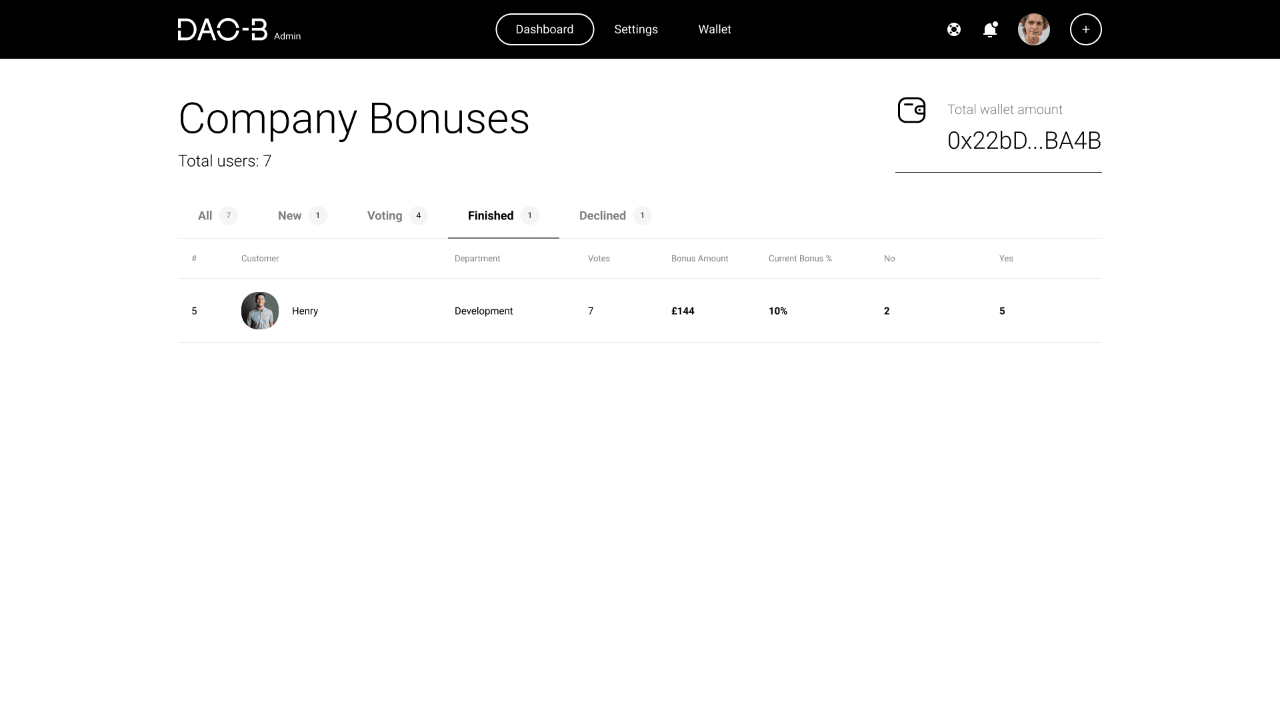
22Finished proposals 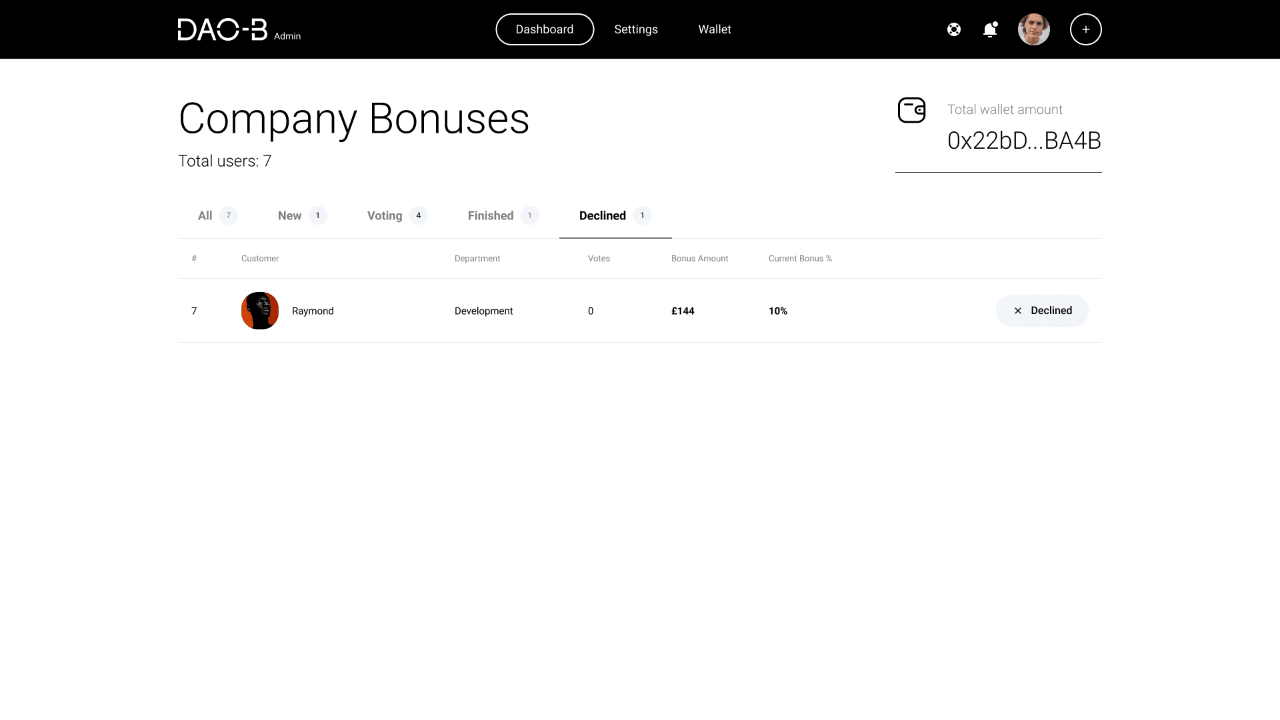
23Declined proposals 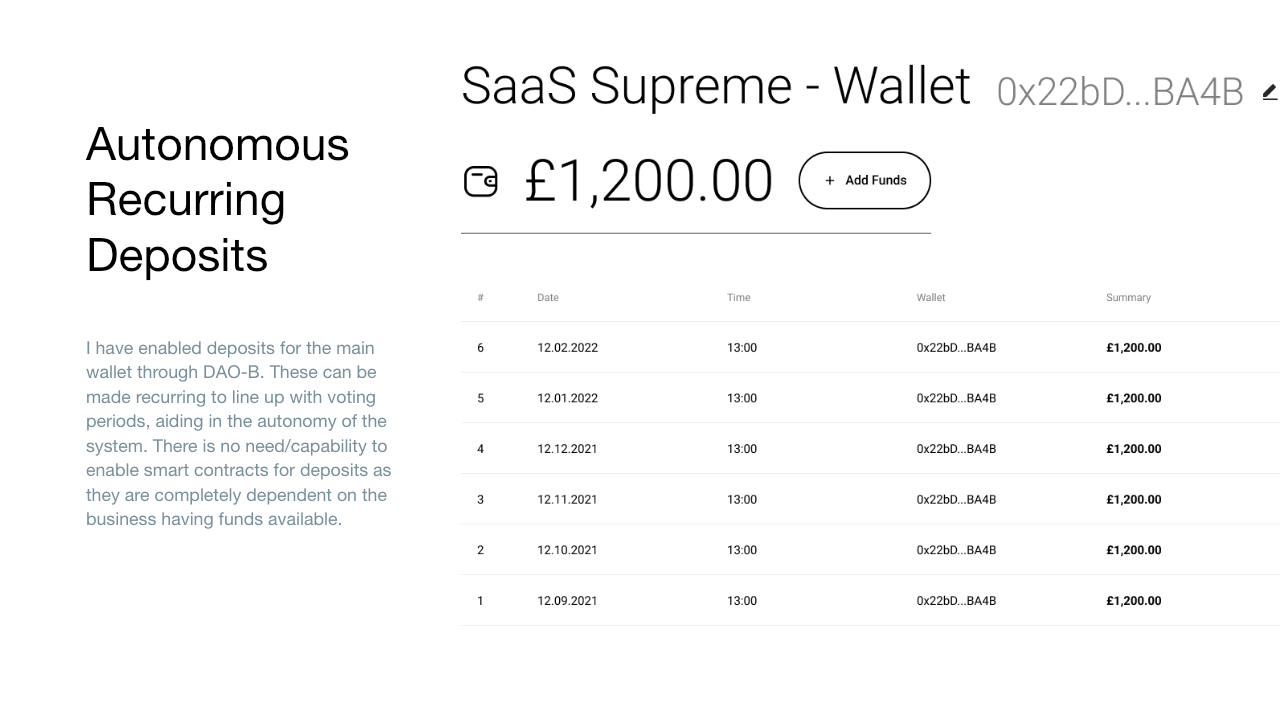
24Autonomous recurring deposits 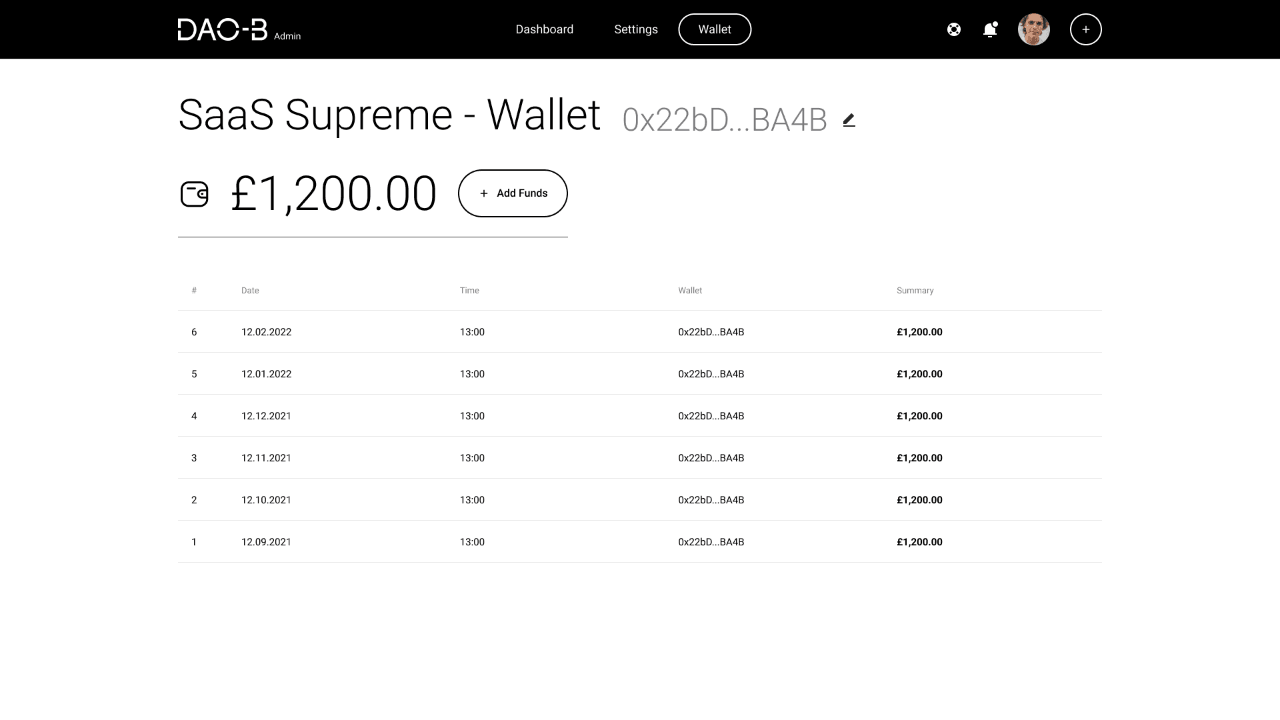
25Wallet transaction history 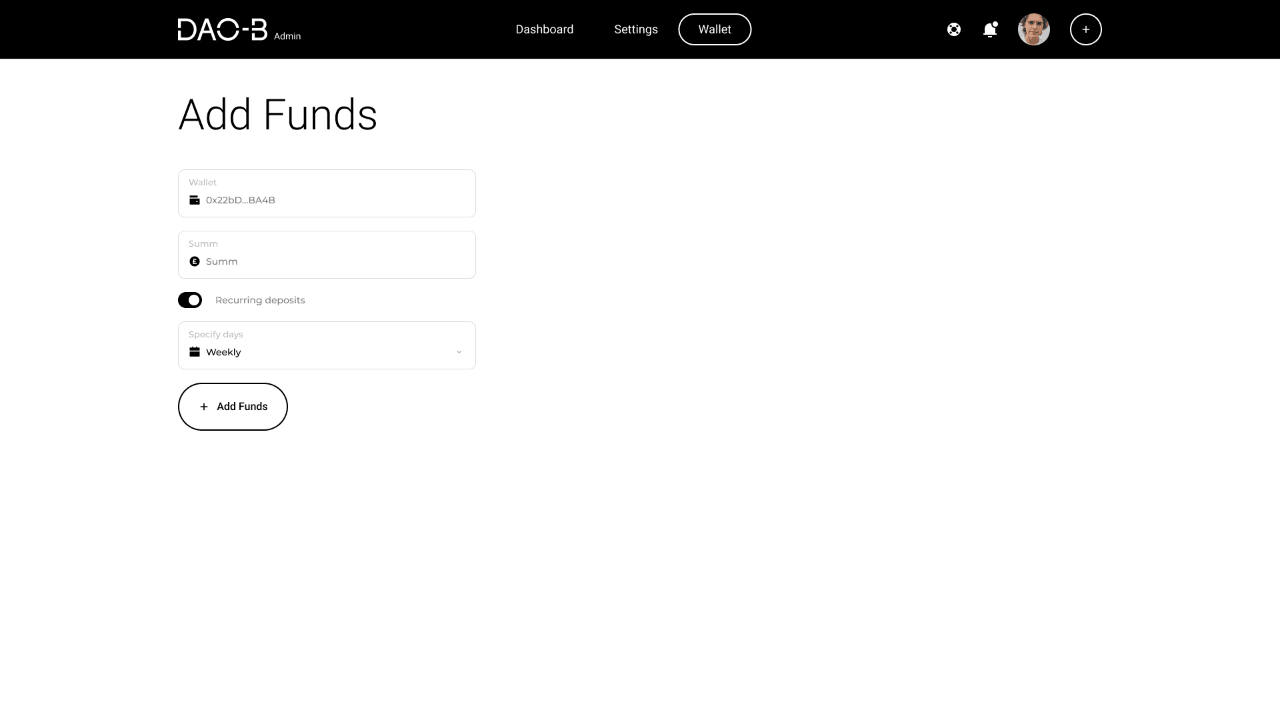
26Add funds 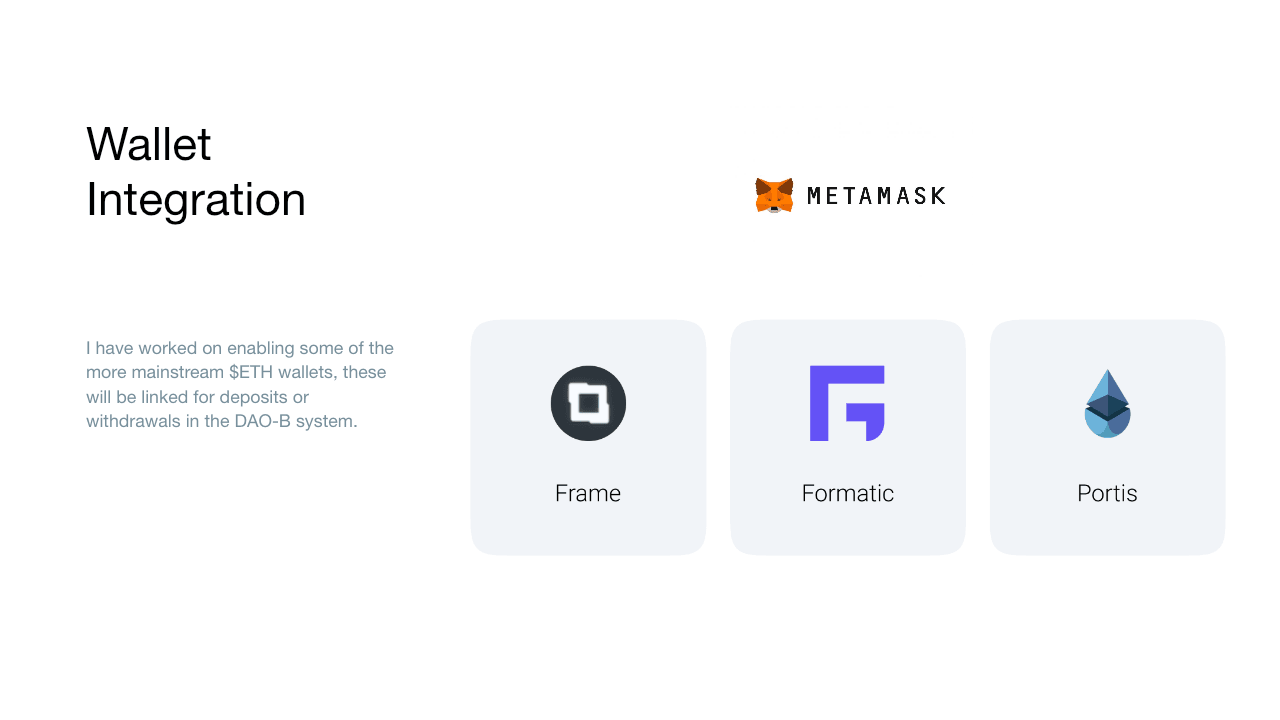
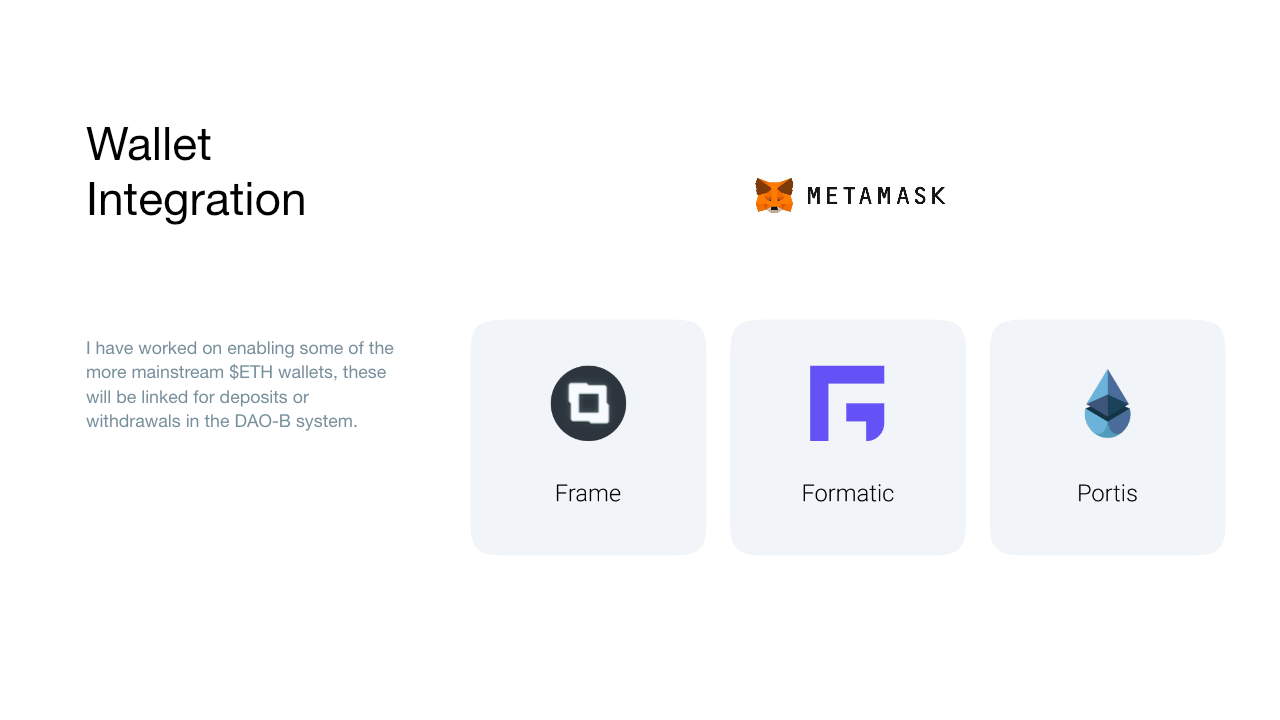
27Wallet integration 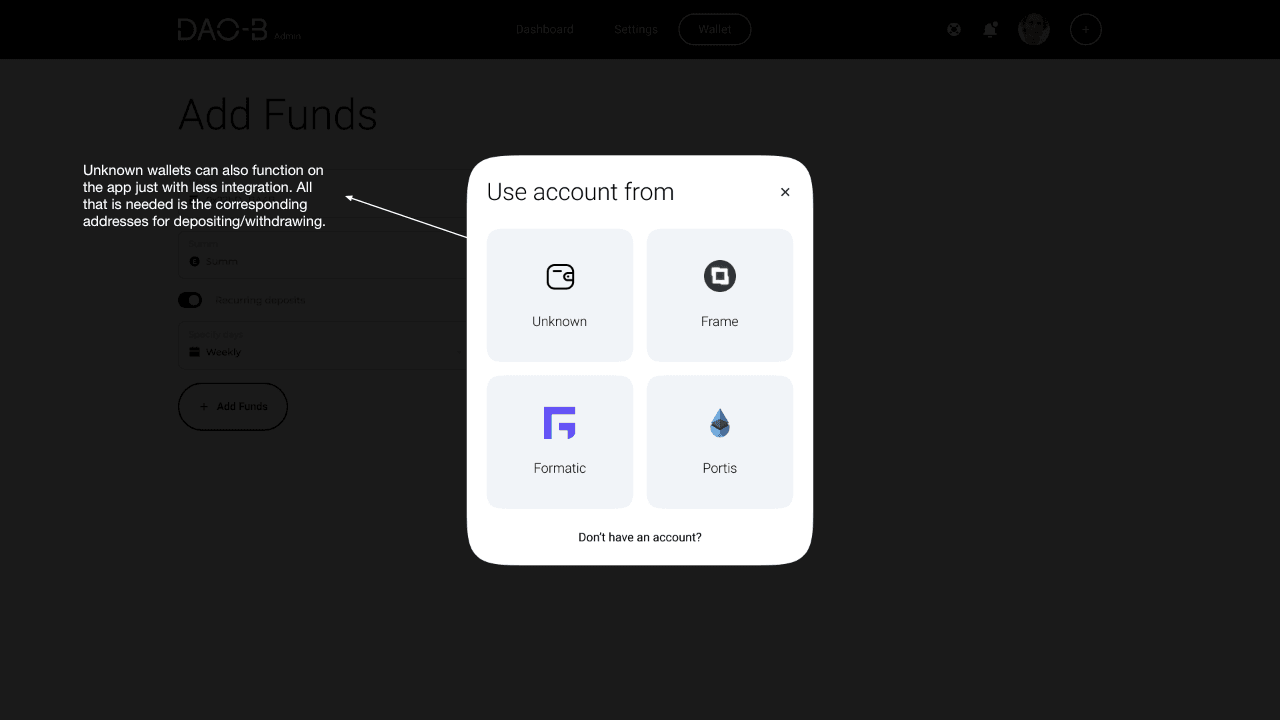
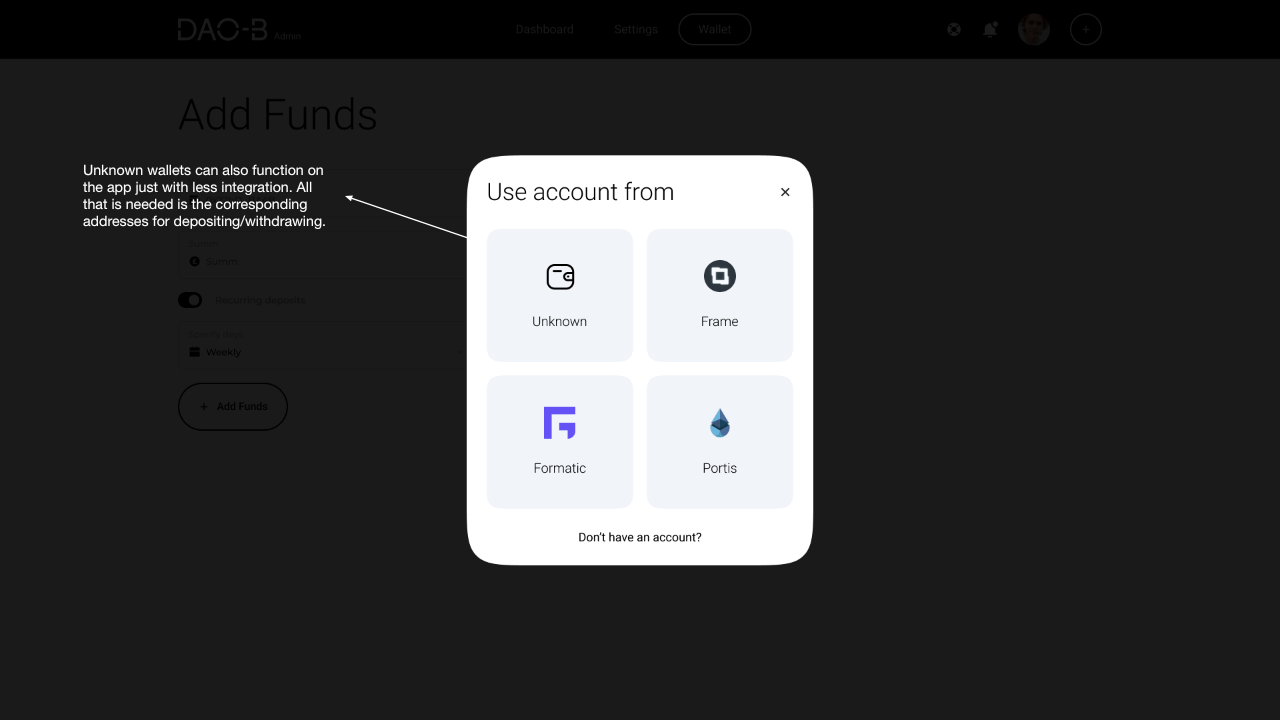
28Choose a wallet account 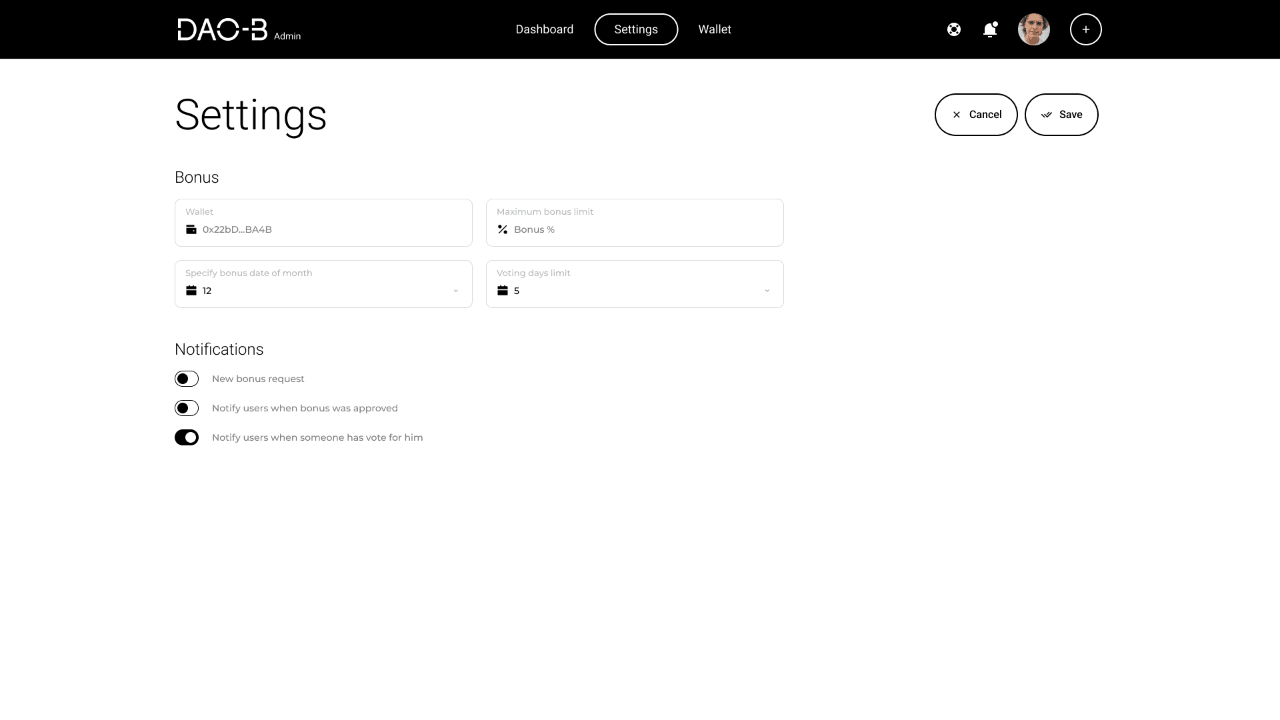
29Settings 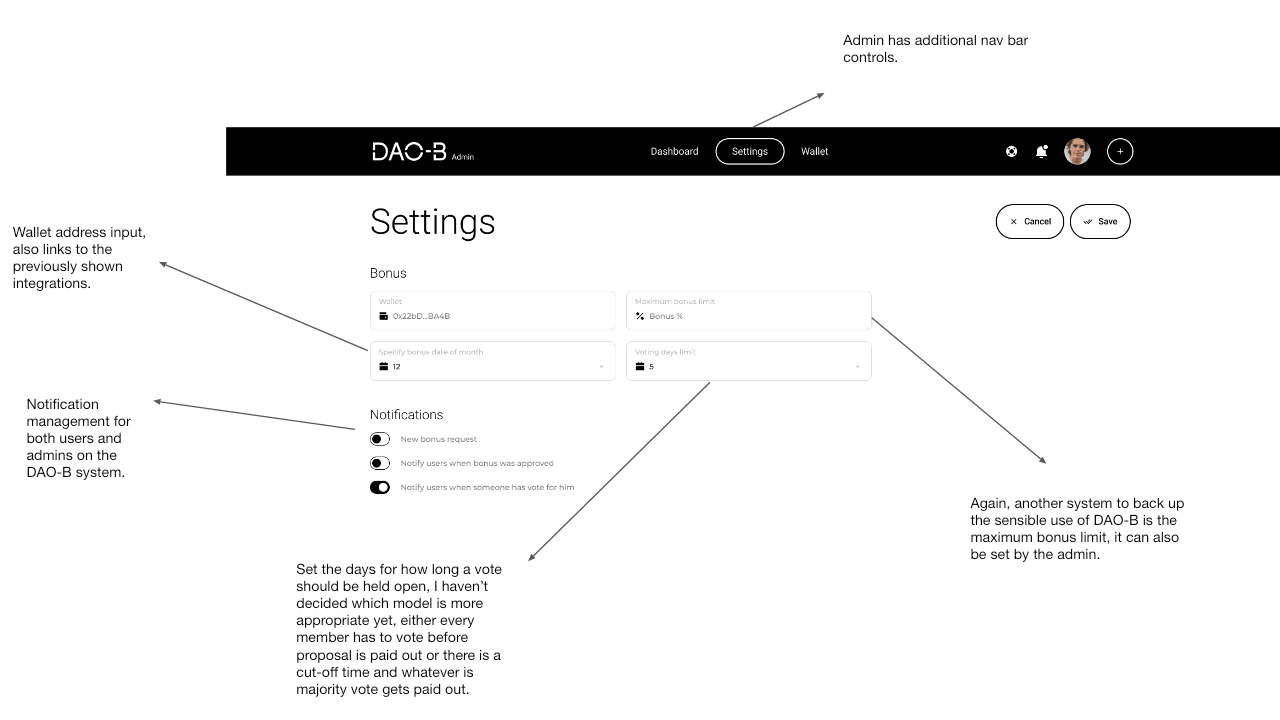
30Settings, annotated 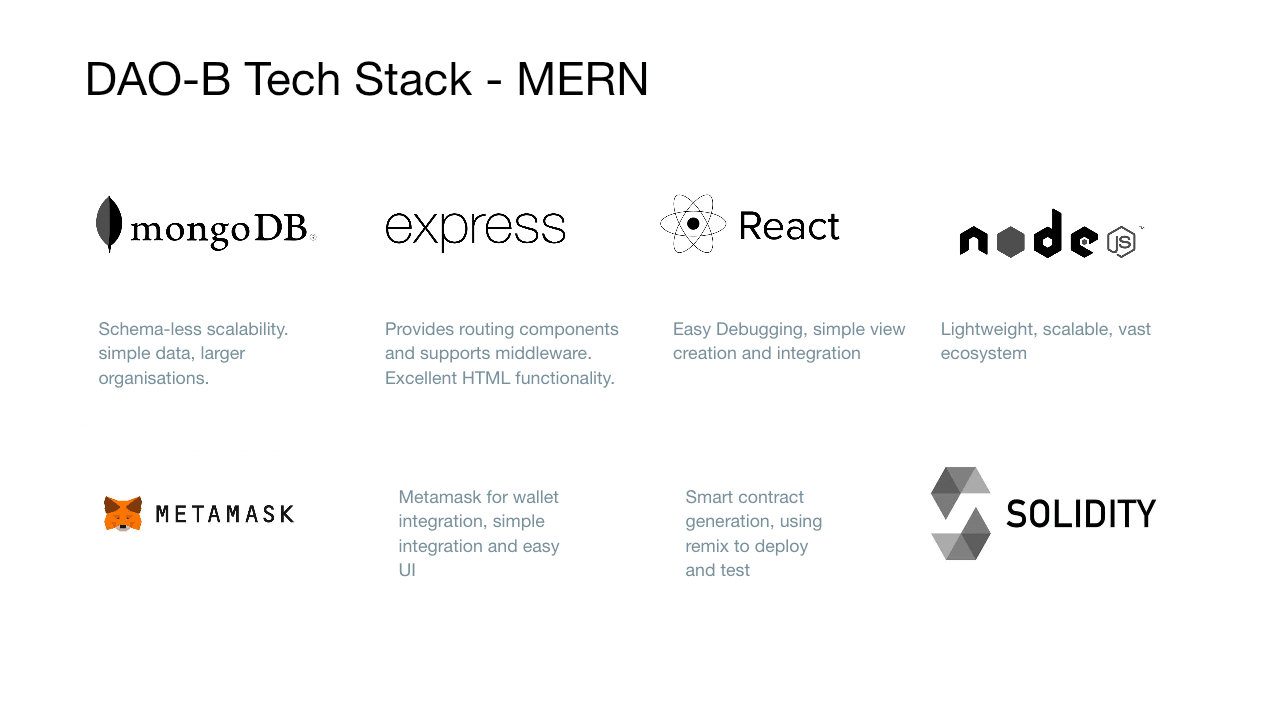
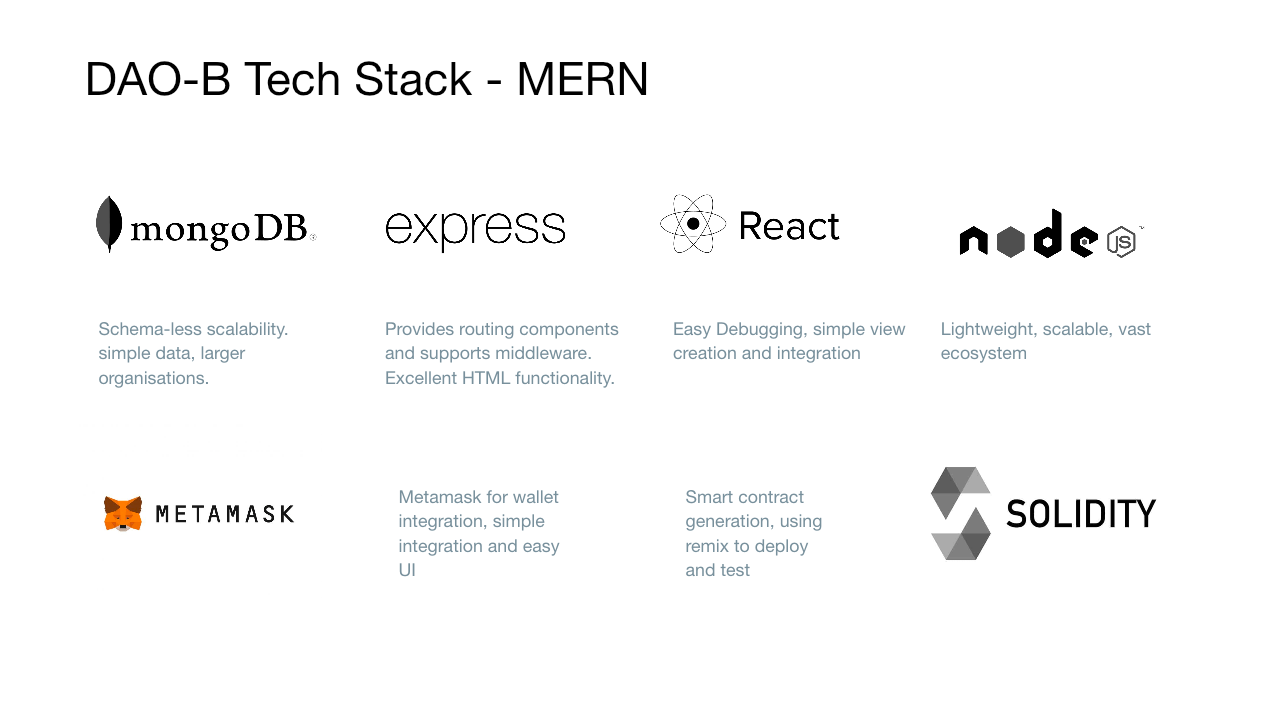
31DAO-B tech stack

Continue the conversation
Need to make an early product direction tangible?
I can help turn an early opportunity into a clear, honest direction that teams and stakeholders can evaluate.
Get in touch