A faster mobile membership journey
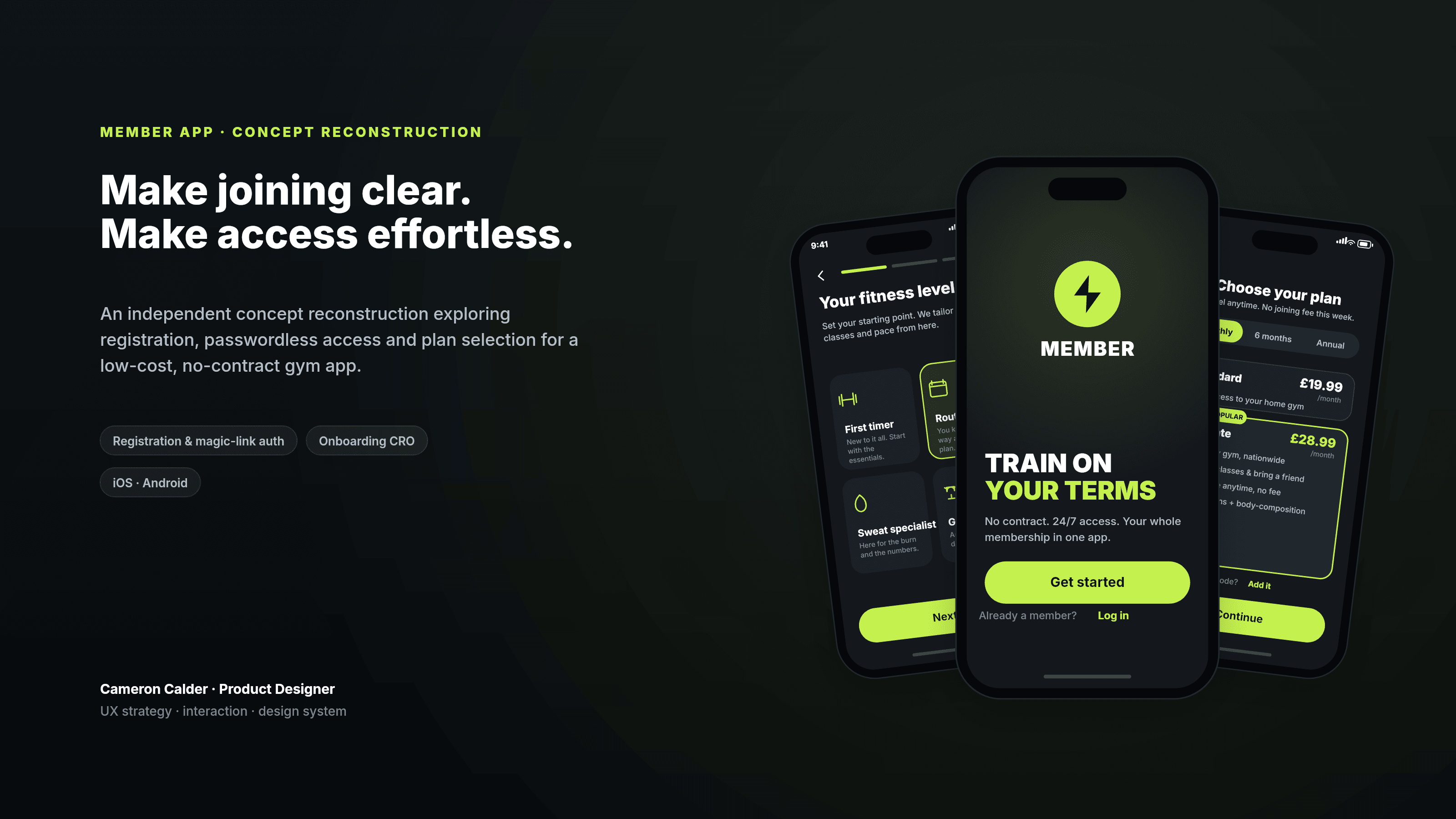
An agency proposal concept created to make a future Gym Group mobile journey tangible and demonstrate visual product craft across onboarding, access, and membership.
- Role
- Product & Visual Designer, concept
- Year
- 2023
- Platform
- iOS · Android
- Scope
- 4journey stages
- Scope
- 48pxminimum tap target
- Scope
- WCAG AAcolour target
Evidence note: Agency proposal concept using reconstructed artifacts; it was not commissioned, shipped, validated or measured.
On this page
What the concept needed to communicate
The proposal needed to make a future mobile membership journey feel fast and trustworthy at a glance. The concept explored account creation, repeat access, onboarding and plan choice as one coherent story.
Decision chapters
The creative direction centred on two easy-to-understand moments in a mobile gym journey: how clearly someone can join and how reliably they can return.
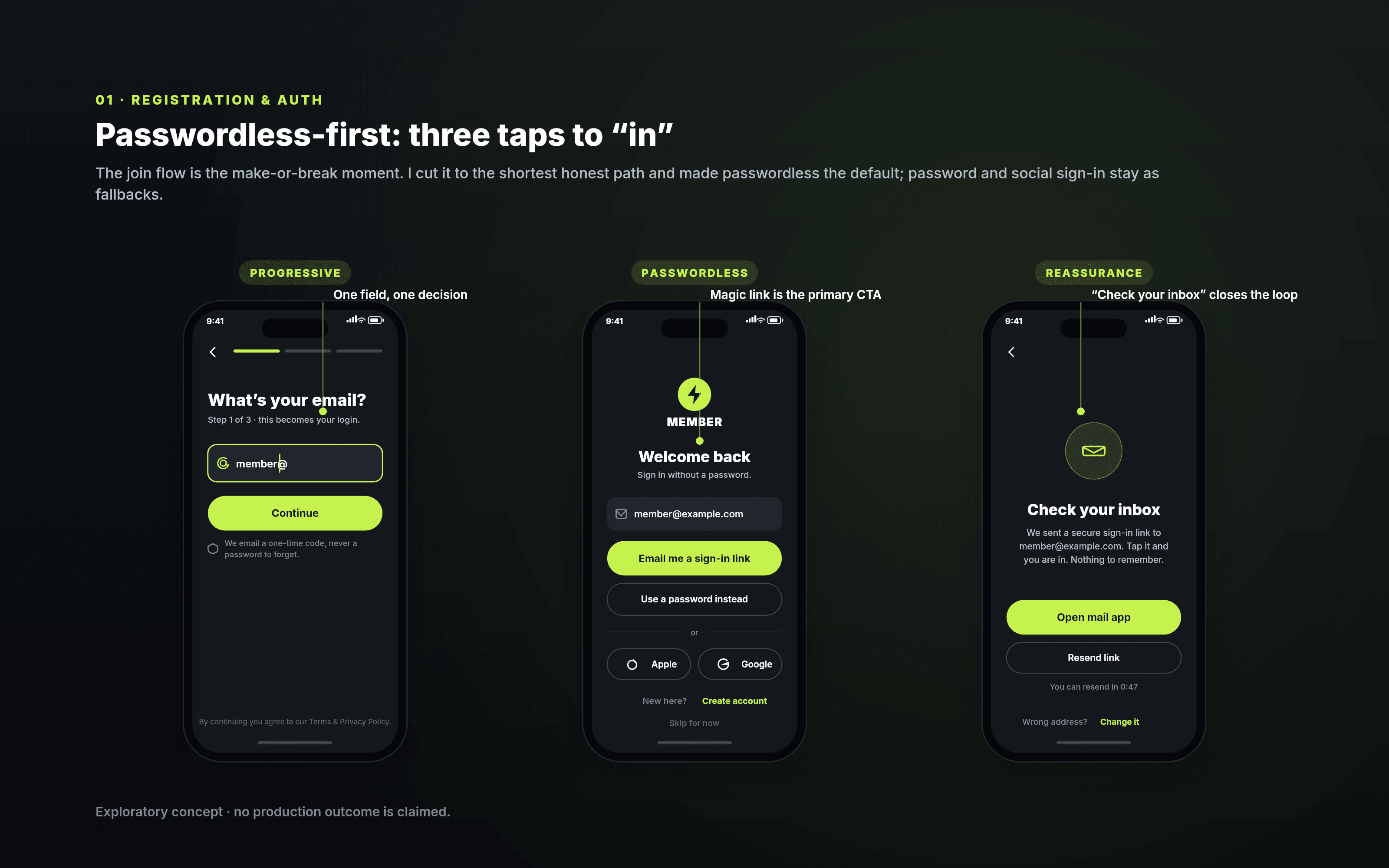
The registration concept turns a multi-field form into one question at a time, each with a single primary action and inline validation. Forgiving inputs, a visible step count, and a "skip for now" option help the idea read as light and approachable inside the proposal.
The patterns underneath are deliberately boring in the best way: one clear decision per screen, real-time validation, generous tap targets, and never asking for anything the moment does not need. Boring is what makes it feel fast.
Passwordless by default
The access concept makes a magic link the primary path, with password and social sign-in kept as fallbacks and biometric unlock shown after the first success. The "check your inbox" screen closes the visual story with a resend timer and an easy way to correct a wrong address.
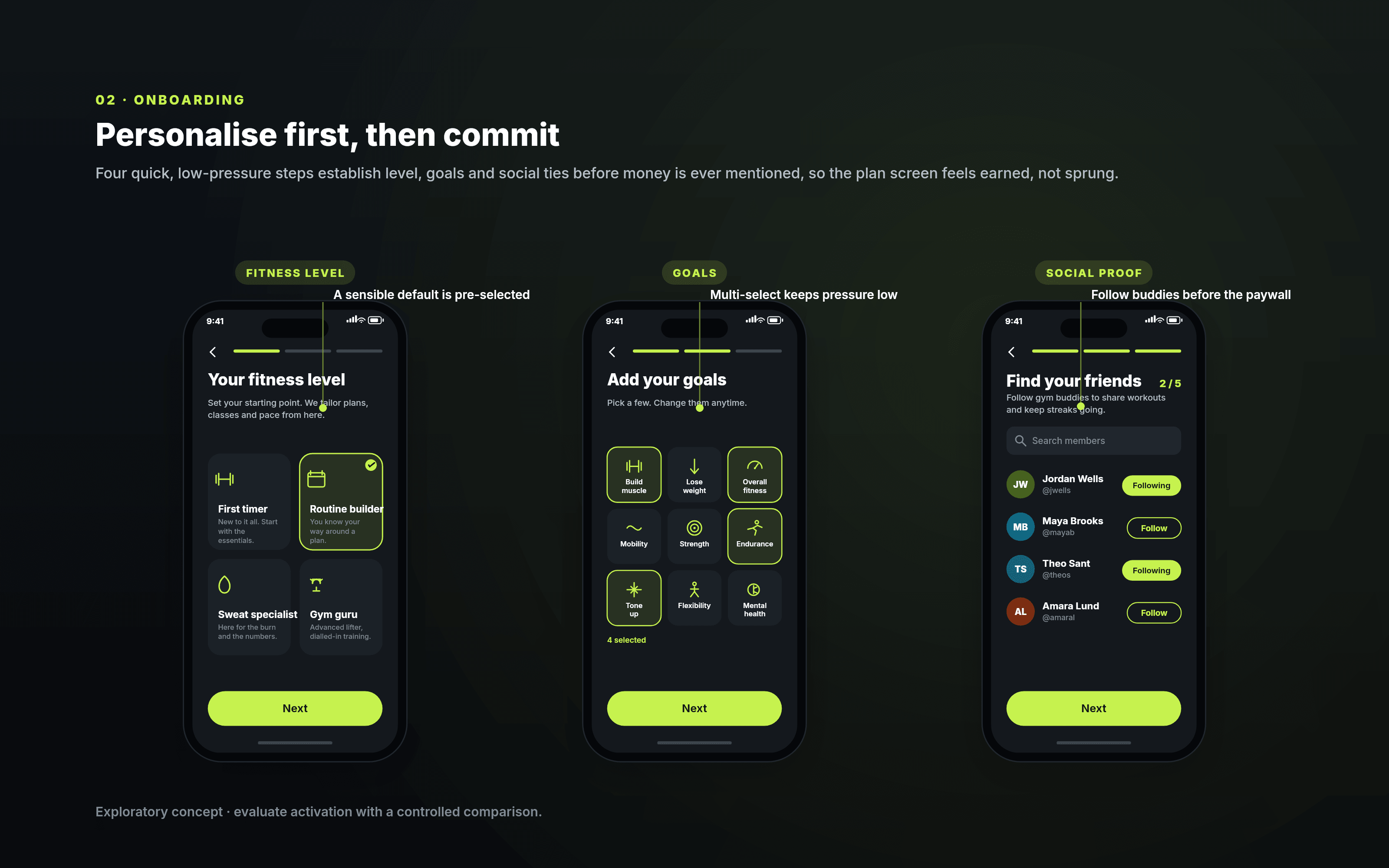
Four quick steps cover fitness level, goals, and gym friends before the concept mentions money. Progress stays visible, choices remain reversible, and a sensible default keeps every screen moving.
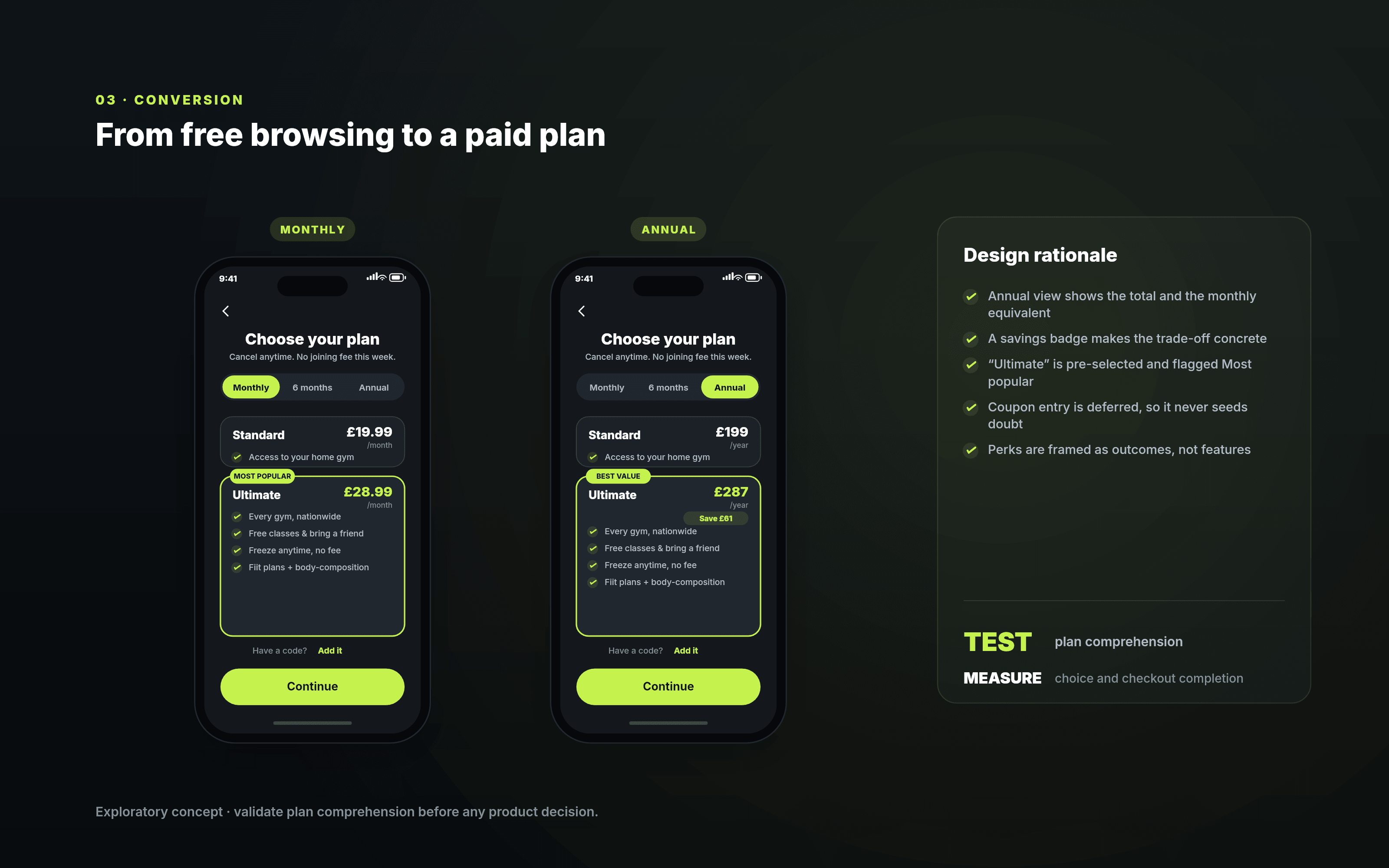
The plan concept puts Standard and Ultimate side by side, shows the billing-period trade-off, and frames each perk as an outcome rather than a feature. The coupon field is deferred so the visual hierarchy stays on the membership choice.
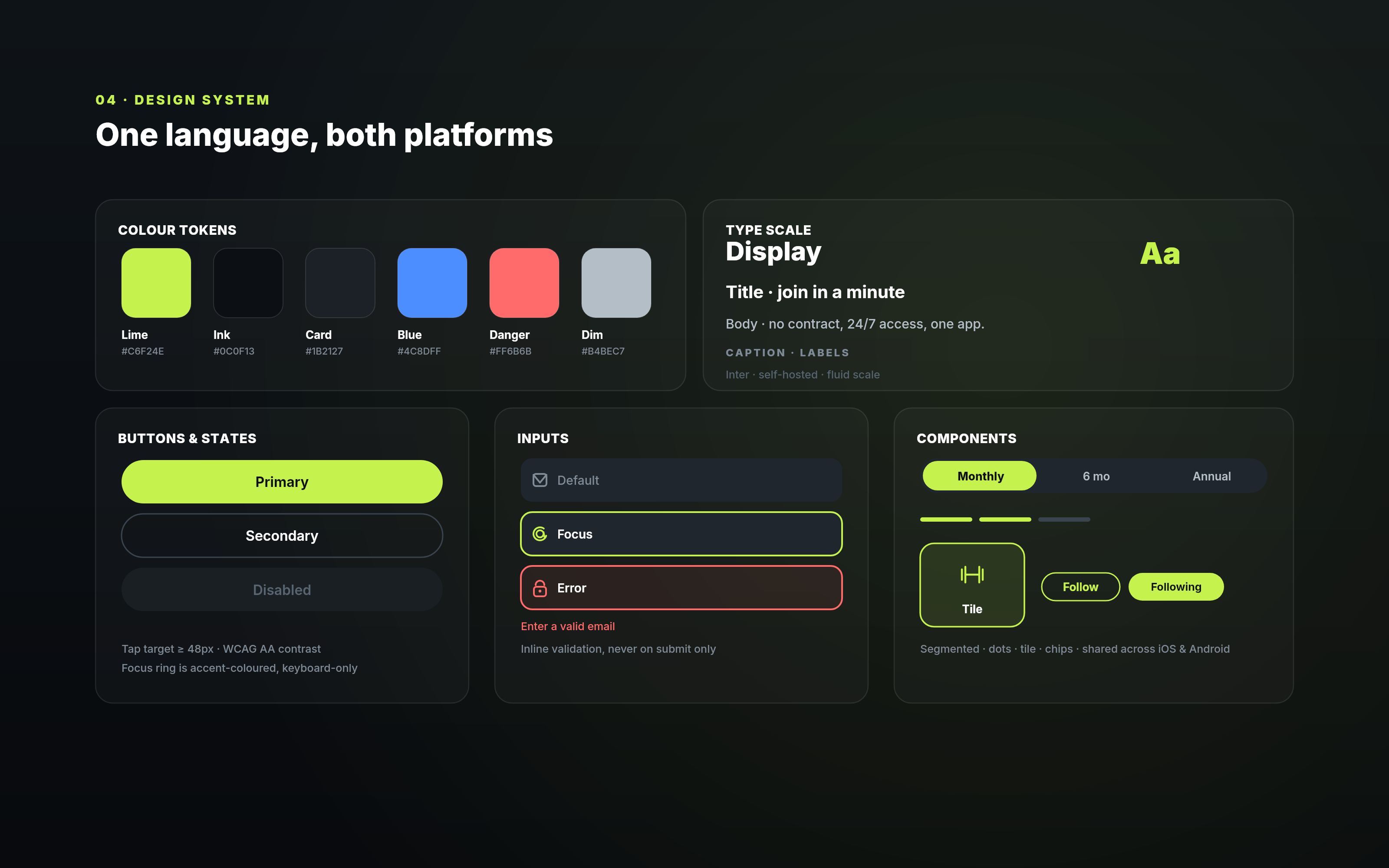
Because the concept spans sign-up, access, onboarding, and billing across two platforms, I applied shared tokens and components so the presentation stayed coherent as the screen set grew. Tap targets were drawn at least 48px, colour pairings were selected against WCAG AA targets, and validation was shown inline.
What this concept demonstrates
The proposal produced a mobile journey and reusable UI direction across registration, passwordless access, onboarding and plan choice. My contribution covered product and visual design for the concept.
Passwordless is only faster when delivery is reliable
A passwordless-first route would need deliverability testing because a delayed or filtered magic link turns the fastest-looking path into the most frustrating one.
Continue the conversation
Need to make an early product direction tangible?
I can help turn an early opportunity into a clear, honest direction that teams and stakeholders can evaluate.
Get in touch